
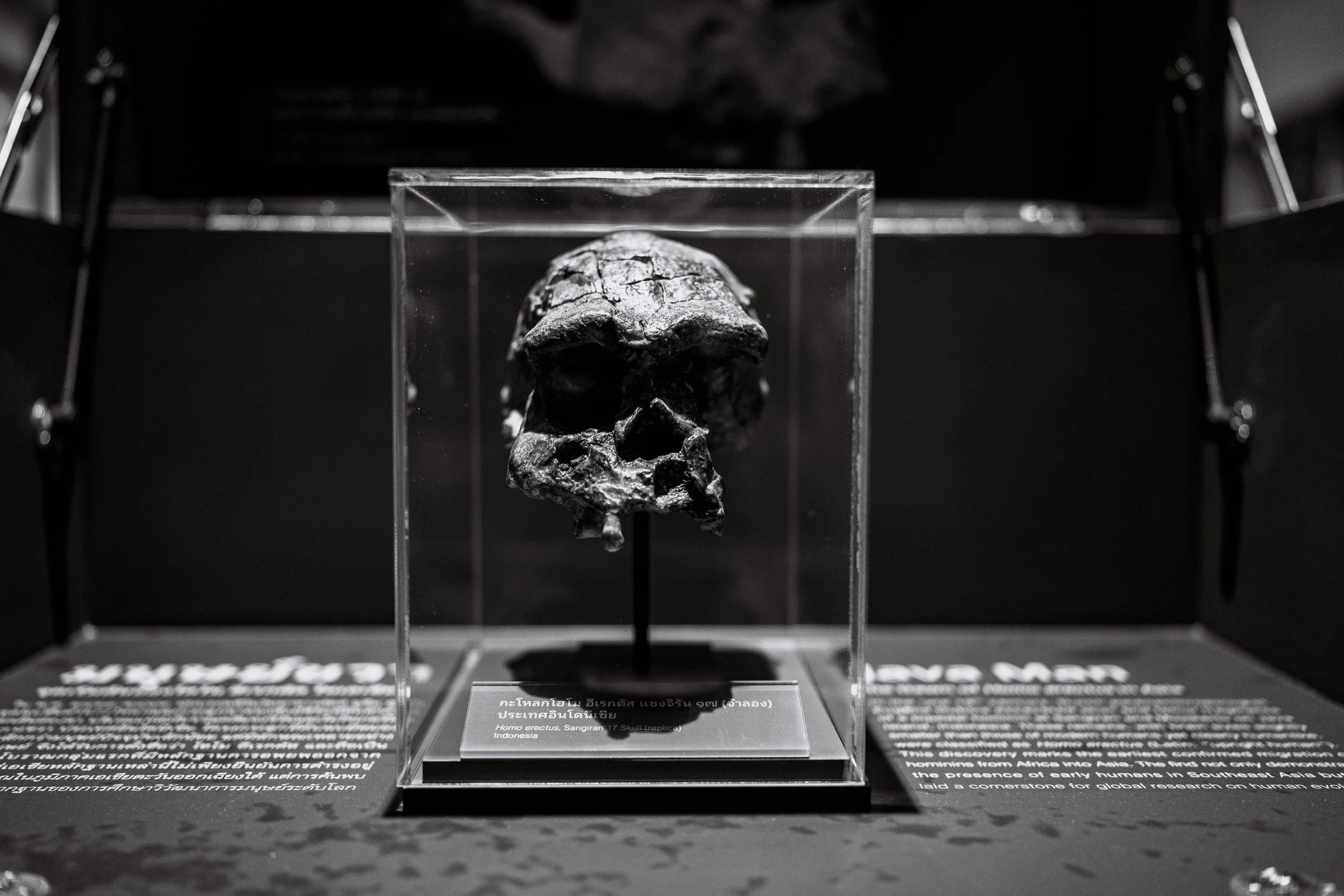
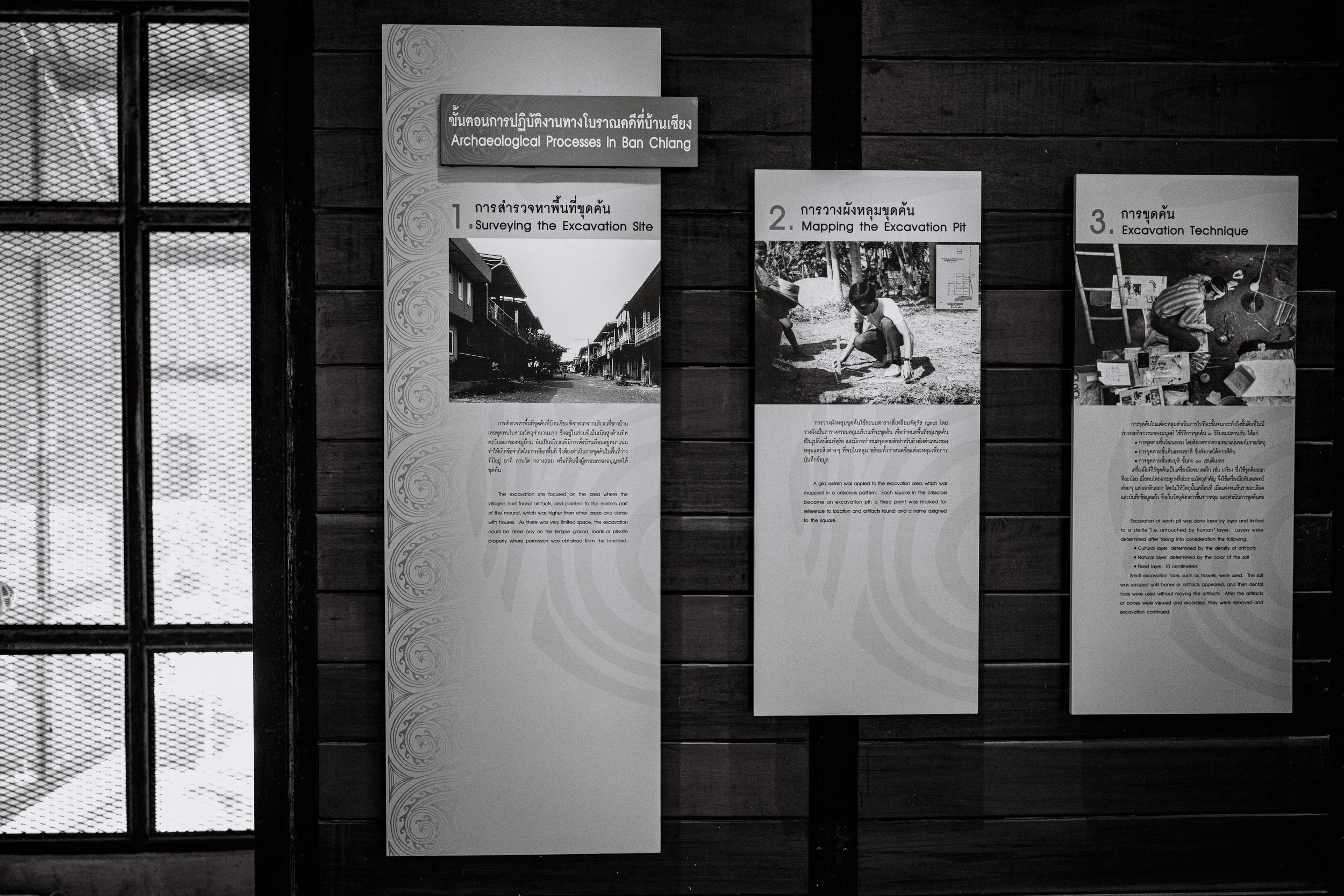
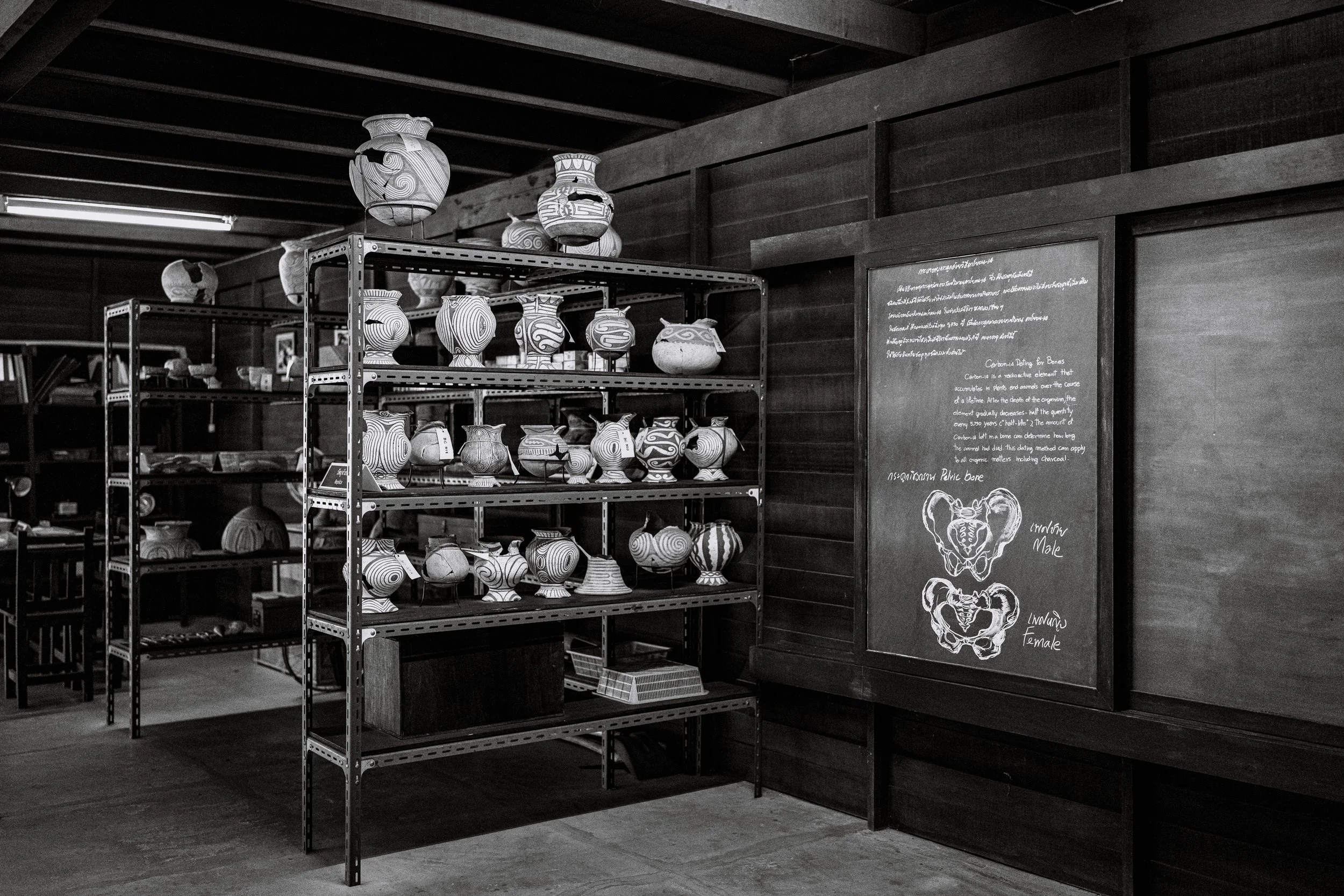
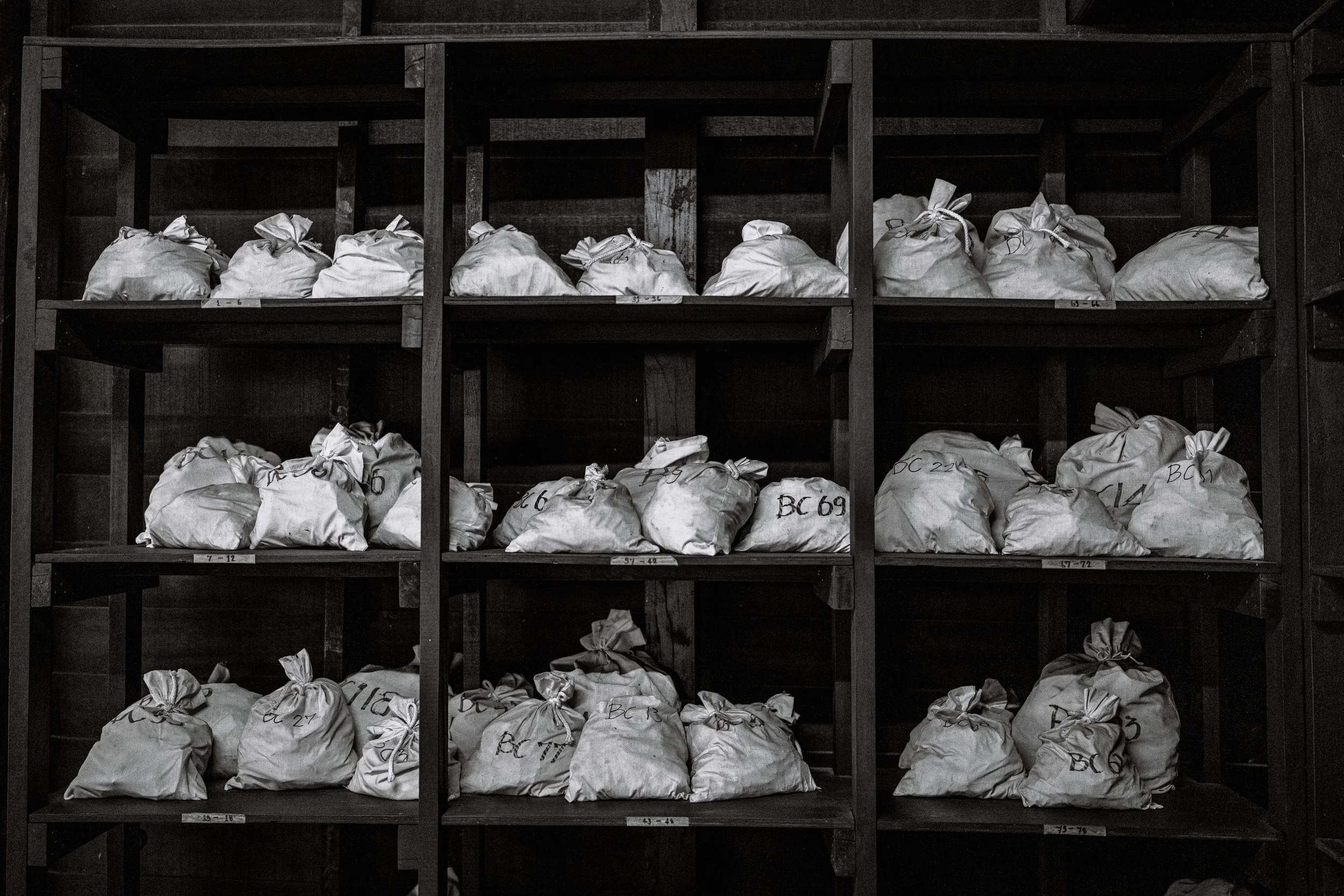
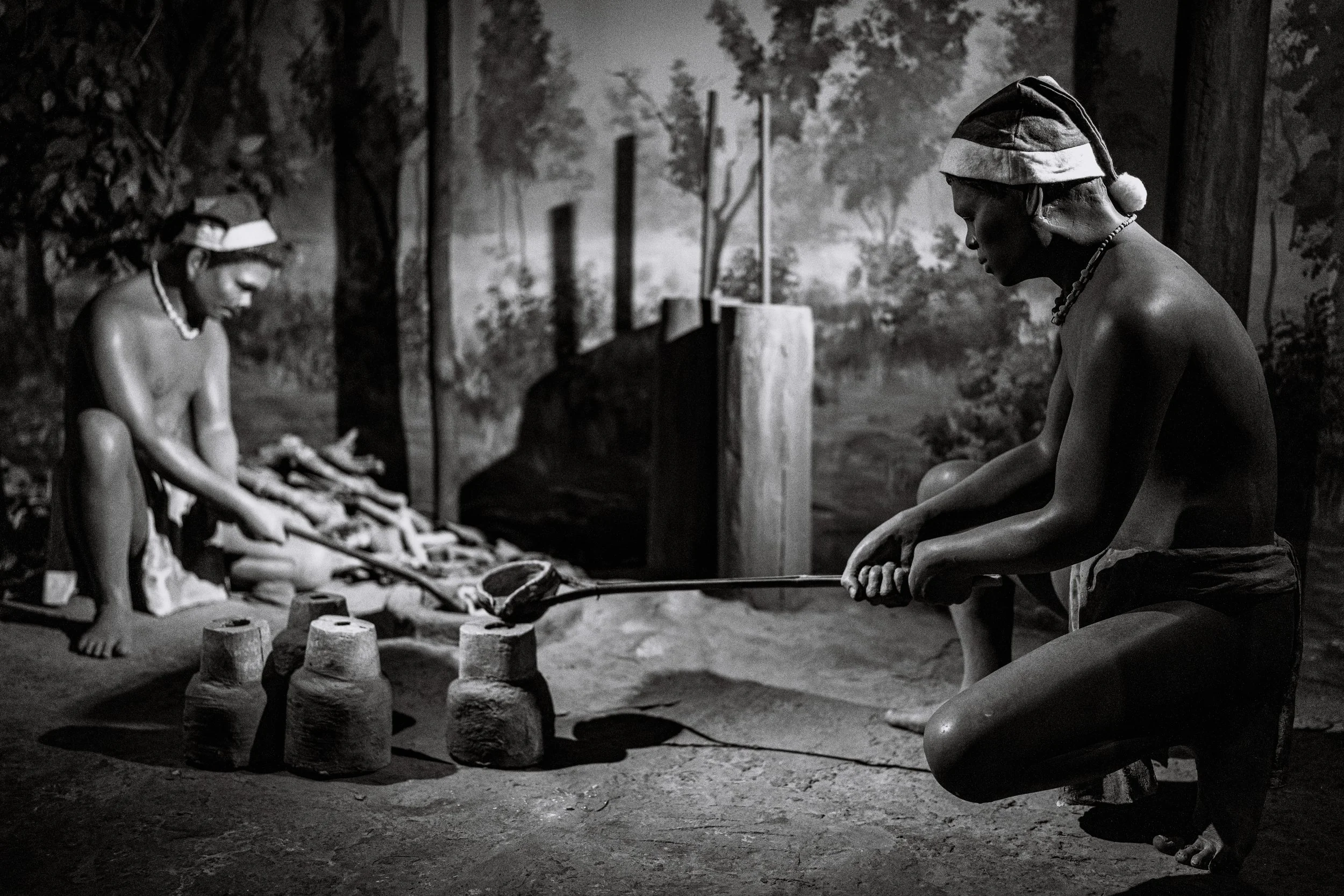
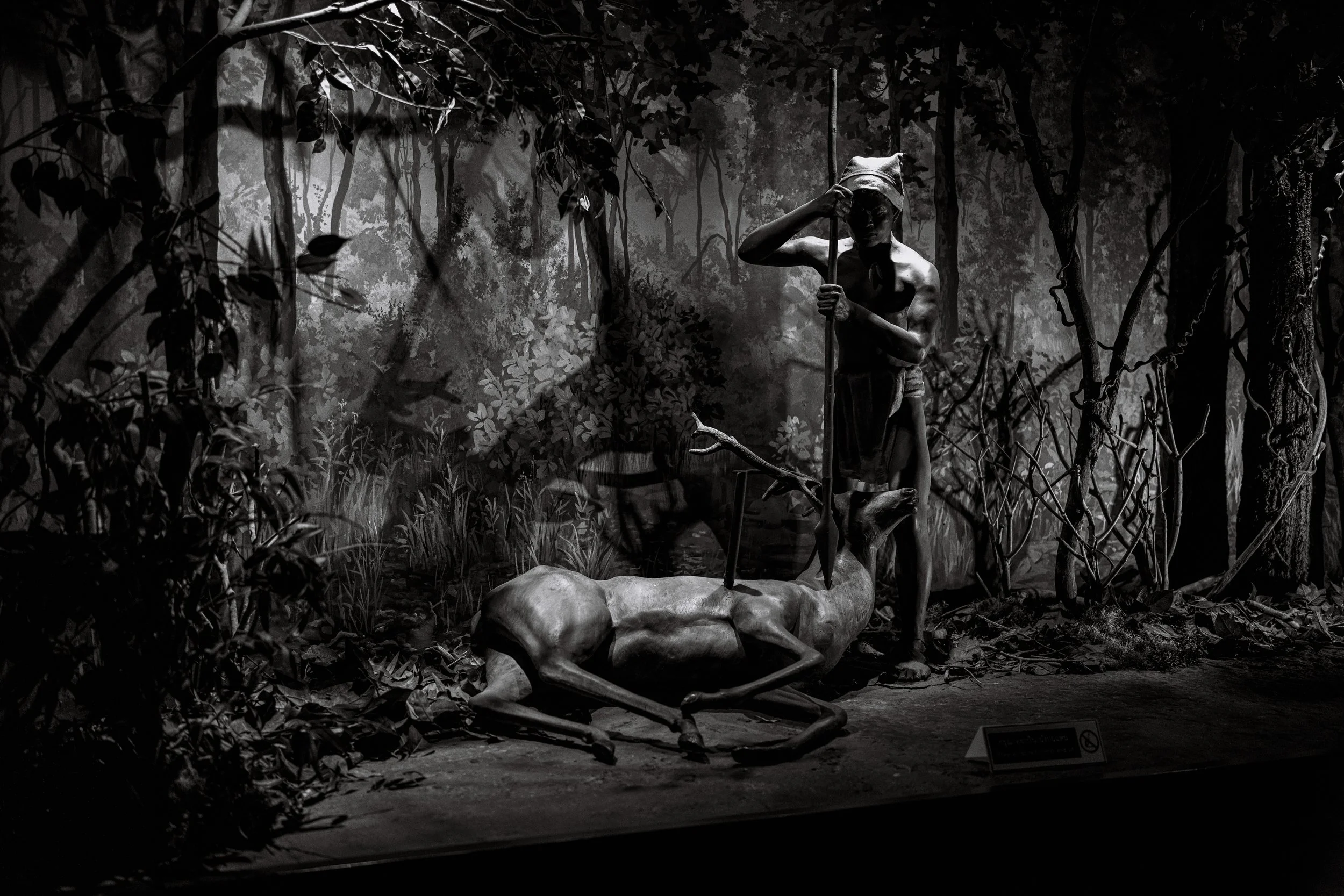
It’s January 13th (2026) today, and I visited this site on the 7th. Ban Chiang was up next on the docket for similar reasons to Sala Keo Kou; a car park, traversable by car in around an hour, and a certain “find” rather than hit-or-miss adventuring in the backroads. I’ve spent most of the past week or two building out workstations for Dararat and I, avoiding the “Seven Deadly Days” as Thailand calls New Years — 272 deaths and 1,511 accidents nationwide. I'll be talking through my experiences building a two-person post-production suite over on Gear Talk shortly. I’m truly past the point of short-sighted decision making, where once I would have revelled in the chaos of New Years, I see unnecessary risk to a project that I only just placed back on its rails. One of the main reasons I chose this site was after speaking with Greg Girard (City of Darkness: Life In Kowloon Walled City, 1993) regarding his time in Thailand during the 1970s, I wanted to see the imagery from the dig site during the Dutch excavation of 1974-75 that I knew were available in the museum (funded by the JFK foundation, and I am sure that Ramasun 7th had nothing to do with it at all).
© David Roberts | Sony α7RV | Sony FE 1.4/35 G Master | Adobe Lightroom
© David Roberts | Sony α7RV | Sony FE 1.4/35 G Master | Adobe Lightroom
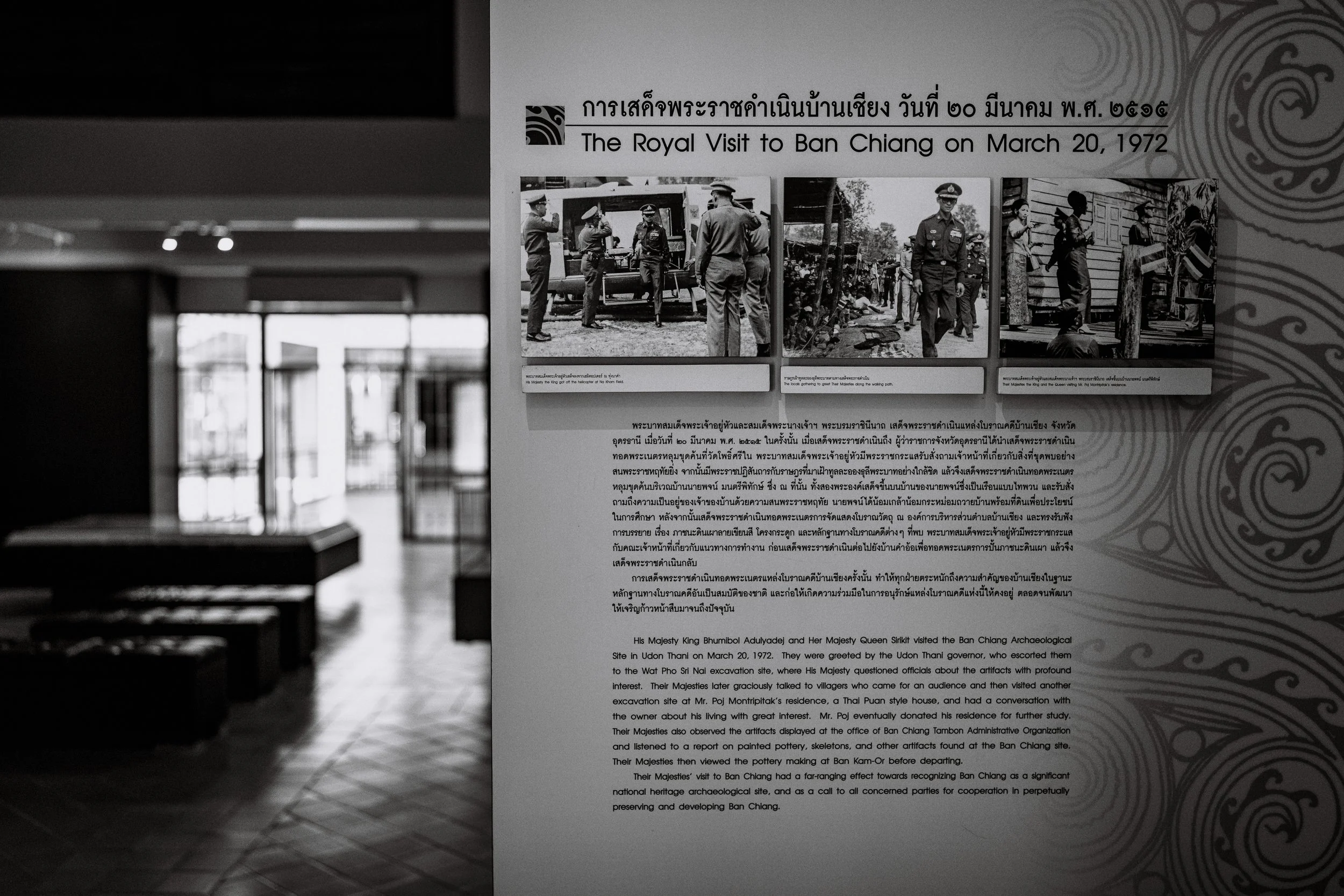
This is where some of my disdain for academic practices creep in, whilst Ban Chiang was funded and excavated in the 1970s, it was not until 1992 that the site gained UNESCO World Heritage status, and the first site in Udon Thani to do so — recently joined by Phu Pra Bat in 2024. With both sites over three millennia old, international recognition by UNESCO is both point of pride for Thailand and point of shame for the international community; insofar as the recognition came far too late. There is a common misconception regarding cultural specificity, once we go back far enough I am of a belief that history is no longer only that of a nations, or of a single race, but of humanity itself. King Rama IX (may he rest in peace, a great monarch and also an avid photographer) visited the site in 1972, and his visit to Udon Thani is still remembered by many of the older generation. Many Yai (Grandmothers) will jump at the chance to speak about how they had an opportunity to meet with the monarch. It is considered that the Royal interest is what sparked curiosity; not in just Ban Chiang but in Thai history, when His Majesty asked ‘Are these the ancestors of Thai peoples?” An important question, and an important answer when viewed with Khmer in context. We are Thai, and have been for millennia. I photograph the caves with melted sand (that’s all lenses and sensors are), the same caves people painted on with crushed leaves and crushed stones over three thousand years ago. We are as seminal as Egypt, Han Chinese, or Adriatic civilisations.
© David Roberts | Sony α7RV | Sony FE 1.4/35 G Master | Adobe Lightroom
© David Roberts | Sony α7RV | Sony FE 1.4/35 G Master | Adobe Lightroom
Most of the time when I go to these places I am the only one there, and rarely will the front-counter clerk be all too interested in upsetting a quiet and easy job for a guy with a camera. Today was no different, in the sense that no one wanted to rock the apple-cart. I did chat with some of the girls stationed at the final stamping point, much like Japanese attractions Thailand has adopted the “catch ‘em all” (don’t sue me Nintendo) visitor stamp mindset in hopes of drawing tourists. Again, I must refrain from judgement as the “Lisa” (Thai star of the K-Pop group Blackpink) Amazing Thailand campaign by the Tourism Authority of Thailand has already seen a significant boost to tourism in Udon Thani’s Red Lotus Lake, only an hour from the city but not a place I have personally visited — though Wat Pa Sri Khunaram is very close. There is a part of me that disdains such triviality, but if it increases revenue for preservation then one cannot argue. They happily stamped my journal, wondered about the camera and as usual asked for a social-media handle. I decided not to take offense, as easy as that would be, as that is how normal people identify themselves; by Instagram or YouTube. I did give them my Instagram, but they are unlikely to keep following for long. They did however, point me towards what they called “street art,” an alleyway with prominent graffiti along the main road.
© David Roberts | Sony α7RV | Sony FE 1.4/35 G Master | Adobe Lightroom
© David Roberts | Sony α7RV | Sony FE 1.4/35 G Master | Adobe Lightroom
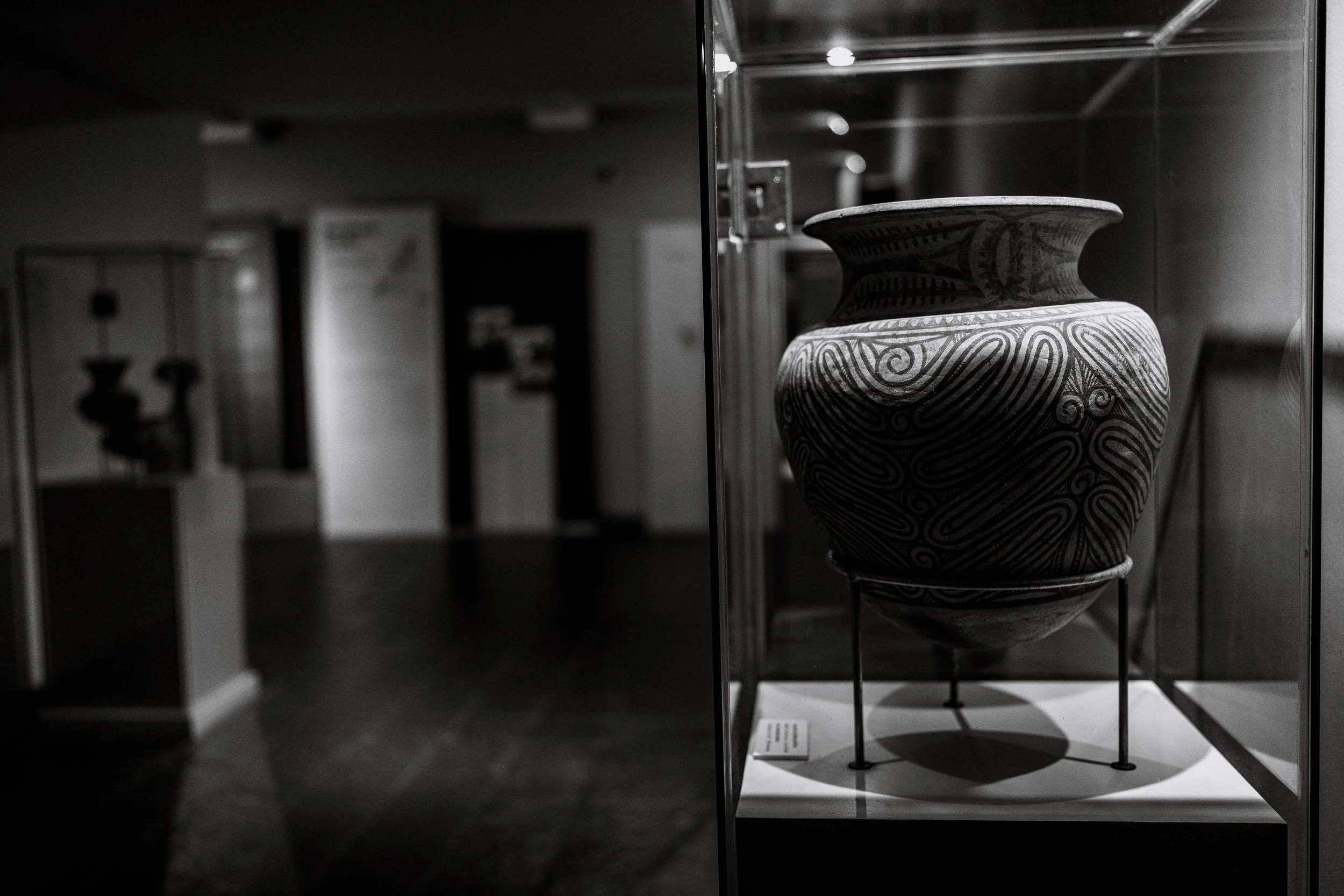
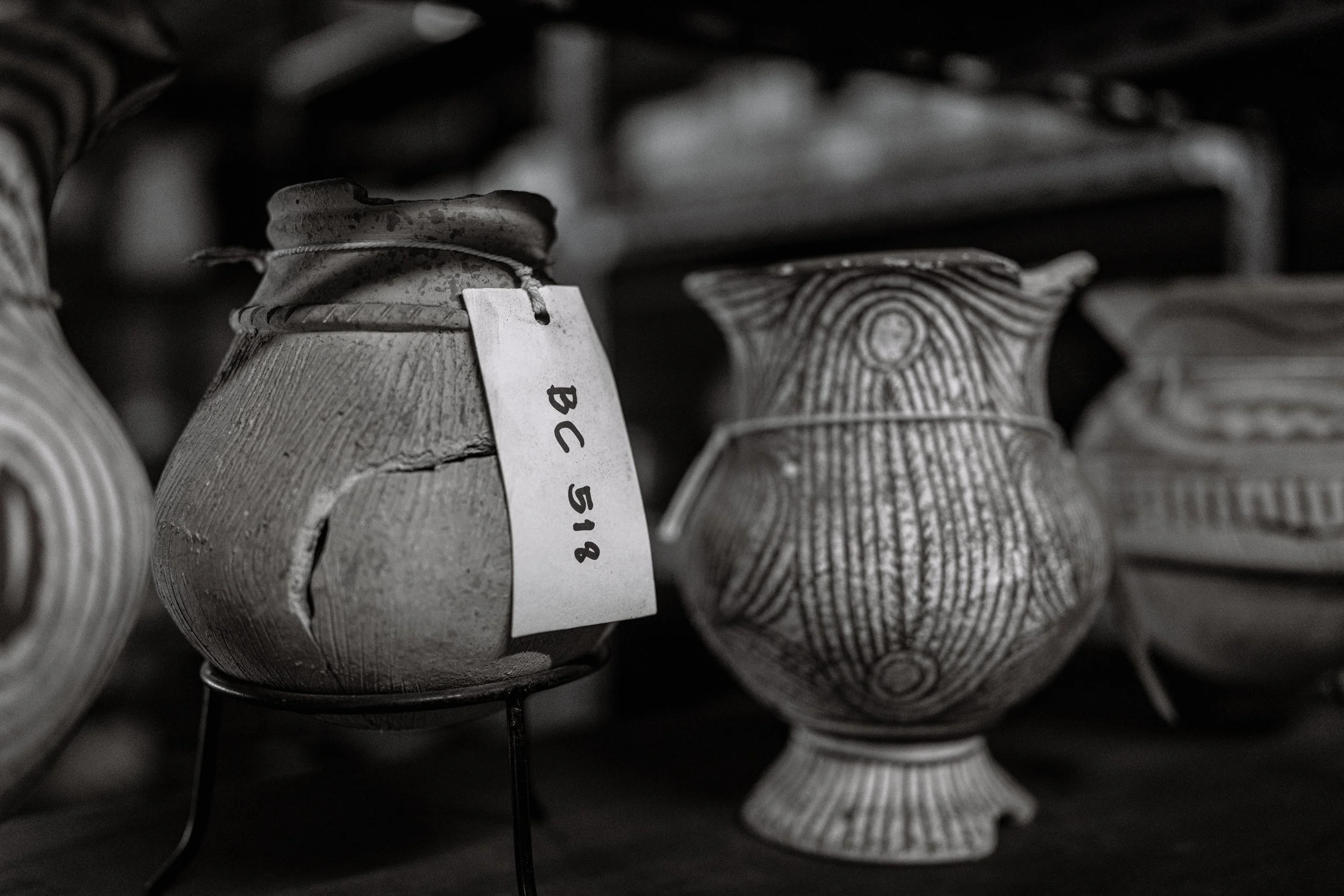
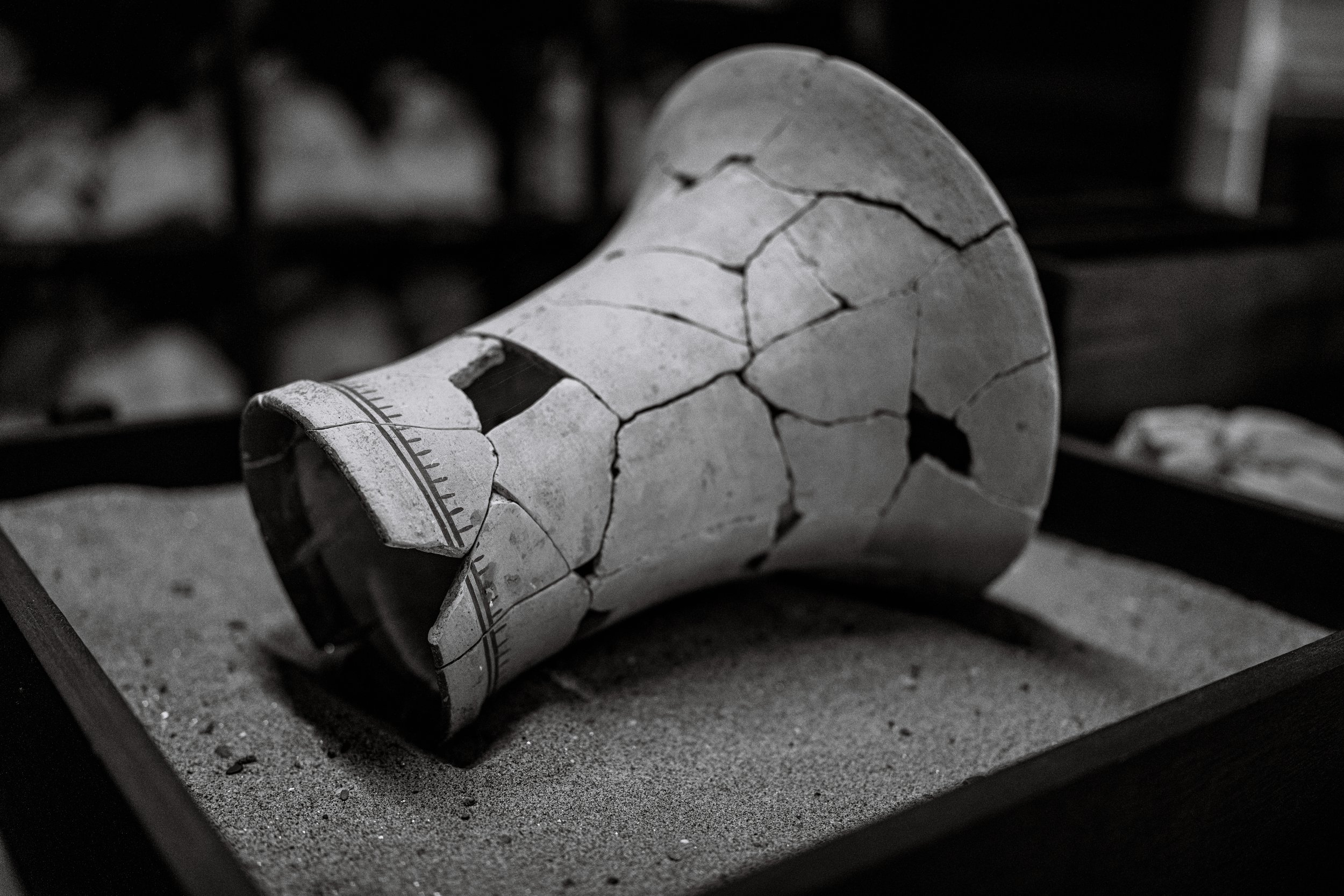
I took a walk down to the alleyway, despite my interest being little more than curiosity and anticipation that there may be a coffee shop close by. I often take Thailand for granted, and it was nice to be a tourist for a short time. Outside of the museum is a row of stalls where practitioners will continue the art of hand-crafted Ban Chiang pottery, brown geometric lines on terracotta. A style incidentally similar to Jomon techniques in northern Japan (ancestors of the Yamato), of a similar time period. I decided to film a little with the FX30, as I had photographed the artisans previously, and consent for image usage within funded stills is becoming a far darker shade of grey each day. YouTube on the other hand is understood and even expected, the FX30 doing its job as an undercover cinema camera. I came across a few Yai who invited me over to talk, and wanted to show me their cat named Durain. I jokingly asked if the cat smelled (Durian is known for its pungent aroma), and as usual British humor completely fell flat. I was then treated to a lecture on how the cat doesn't smell, and is looked after well but the owner enjoys Durian fruit — likely a luxury only found later in life. Working on Discover Temples of Thailand rather than Soul of the Planet, Heart of the People limits these interactions, and I find myself missing the human element.
© David Roberts | Sony α7RV | Sony FE 1.4/35 G Master | Adobe Lightroom
© David Roberts | Sony α7RV | Sony FE 1.4/35 G Master | Adobe Lightroom
Of course the souvenir pots were not made the exact same as antiquity, and there were many pots in the multiple thousands of baht (which is still less than a Chinese-made mass market piece at Target) but for 40 Baht you could buy a hand-made Ban Chiang pot, with the only thing separating the two being around two millennia. What do I see in this? I see someone who would sell the pot to buy a meal, and to them likely a worthy trade. But I had wished that they had Lisa learn the art, and help sell workshops making them instead of putting up selfie spots. What would be better than a pot made in Ban Chiang other than a pot you made yourself in Ban Chiang, and a fee that would actually cover the craftsman’s time (please, craftsman is masculine but non-gendered and correct grammar). This is what saddens me about Thailand, often the simplest solutions are overlooked, and what’s another farang with a camera?
© David Roberts | Sony α7RV | Sony FE 1.4/35 G Master | Adobe Lightroom
© David Roberts | Sony α7RV | Sony FE 1.4/35 G Master | Adobe Lightroom
I got a lot more than anticipated out of this site, and even more again from writing this field-report. Will any of it make it to the monograph? Of course not, but most photography is made long before you press the shutter. Is this a temple? Perhaps once, is this a sacred site? To me, most certainly. I dreamed of becoming Indiana Jones, or Tomb Raider…. this is as close as I can get to that fantasy. Not the fantasy of being an archaeologist, that is achievable — but the fantasy of discovery.
Please note: Videography was prohibited and denied on request. Verbal consent was given by staff present for handheld available light capture of still imagery — using Sony α7RV & FE 1.4/35 G Master presented — for use on personal website. As such this will be a Production Field Report only unless documented consent is given for monograph use by those who have the authority to do so.
Discover Temples of Thailand is supported by Angelbird Technologies with companion motion sequences in collaboration with Dehancer Film Emulation.

