
It’s now December 22nd (2025), almost Christmas. Snow isn’t falling in Isaan, but I have been given the all-clear from my doctor. I’ve worked out quite a lot of frustrations these past weeks, and although I am disappointed that the initial production on Discover Temples of Thailand did not go as planned, I think a Phoenix will rise from the ashes. I know that I am not at full capacity yet, in fact I doubt I am even close, so I purposefully picked some low-hanging fruit. But what was the alternative? If these Field Reports are to be an account of my efforts, let them tally each penny. I chose Sala Keo Kou for one main reason, it has really cool statues and a car park, so I knew I could drive in comfort rather than ride in the heat, and walk away with something. Also: no dogs, no rabies. Despite having photographed it on at least three separate occasions (and once for ArtraLab) I don’t actually have any record of the site.
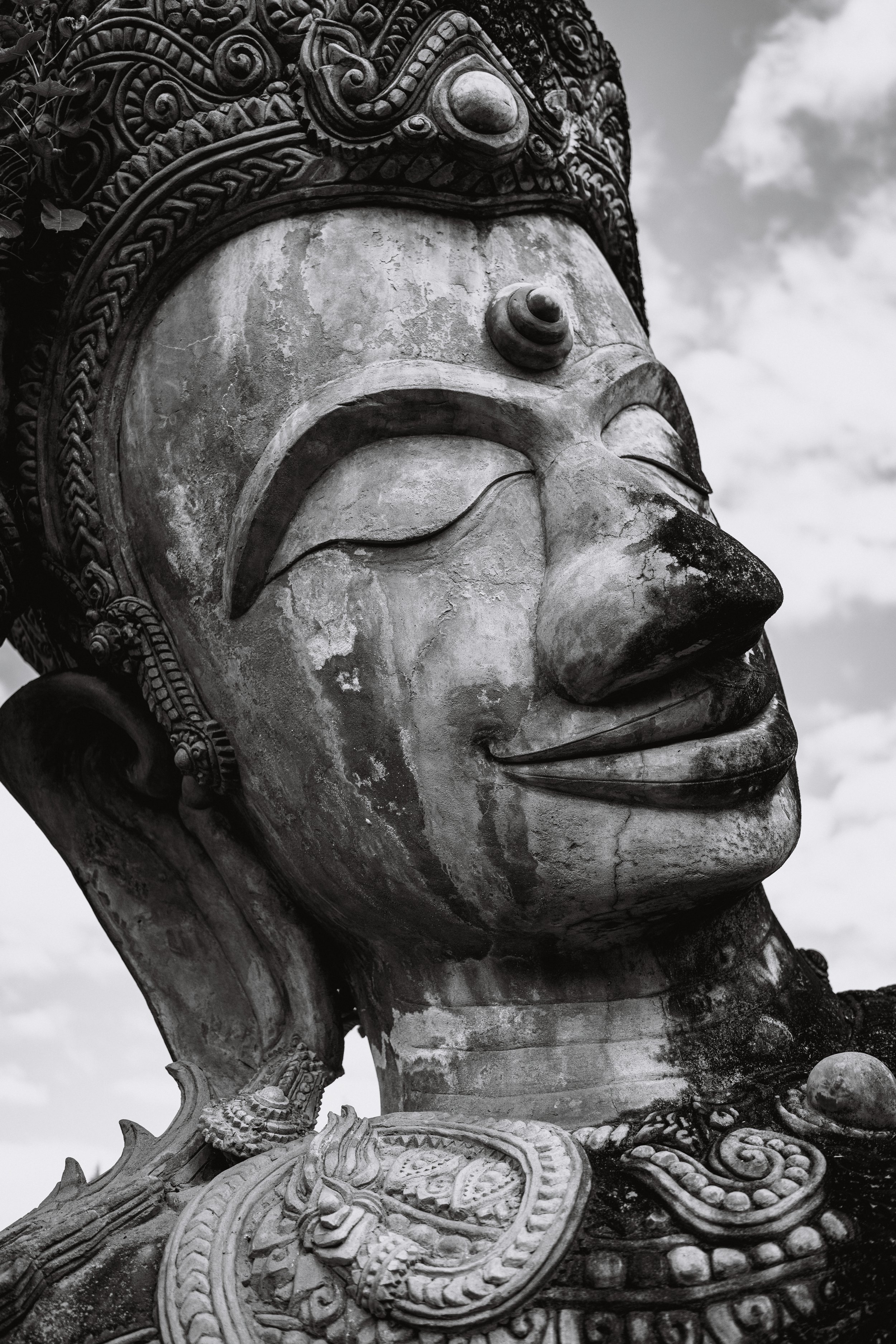
© David Roberts | Sony α7RV | Sony FE 1.4/35 G Master | Adobe Lightroom
This is also a change in technical pace. After the dissolution of partnership with ZEISS I wanted a clean slate, but I didn’t want to jump back into the sponsorship pond; though I am sure Venus Laowa or ArtraLab would have instantaneously picked up the slack. I love the ZEISS look, I have for decades — its the reason I chose to partner with them. But, I needed to know, and I need the world to know, that my imagery is not dependent on a specific lens. I think my work within the Fujifilm editorial sphere shows this, but what I wanted was to prove it a step further; that I don’t need to hide behind optical character at all. If there is just one thing that someone with a real interest in documentary photography takes away from what I say is that control over budget is paramount, and no gear decisions should be made without thorough thought for financial implication. This is especially true in the portfolio building stage, where it’s images you need not more gear. When I chose to purchase a 35mm f/1.4 G Master, out of pocket, over using my existing equipment, it was a declaration as much as a purchase. My new lens says “This guy has nothing to hide behind, and even less excuses.” That is the exact message I want to get across. I’m not limited, in both execution or capacity. At least when it comes to optics…
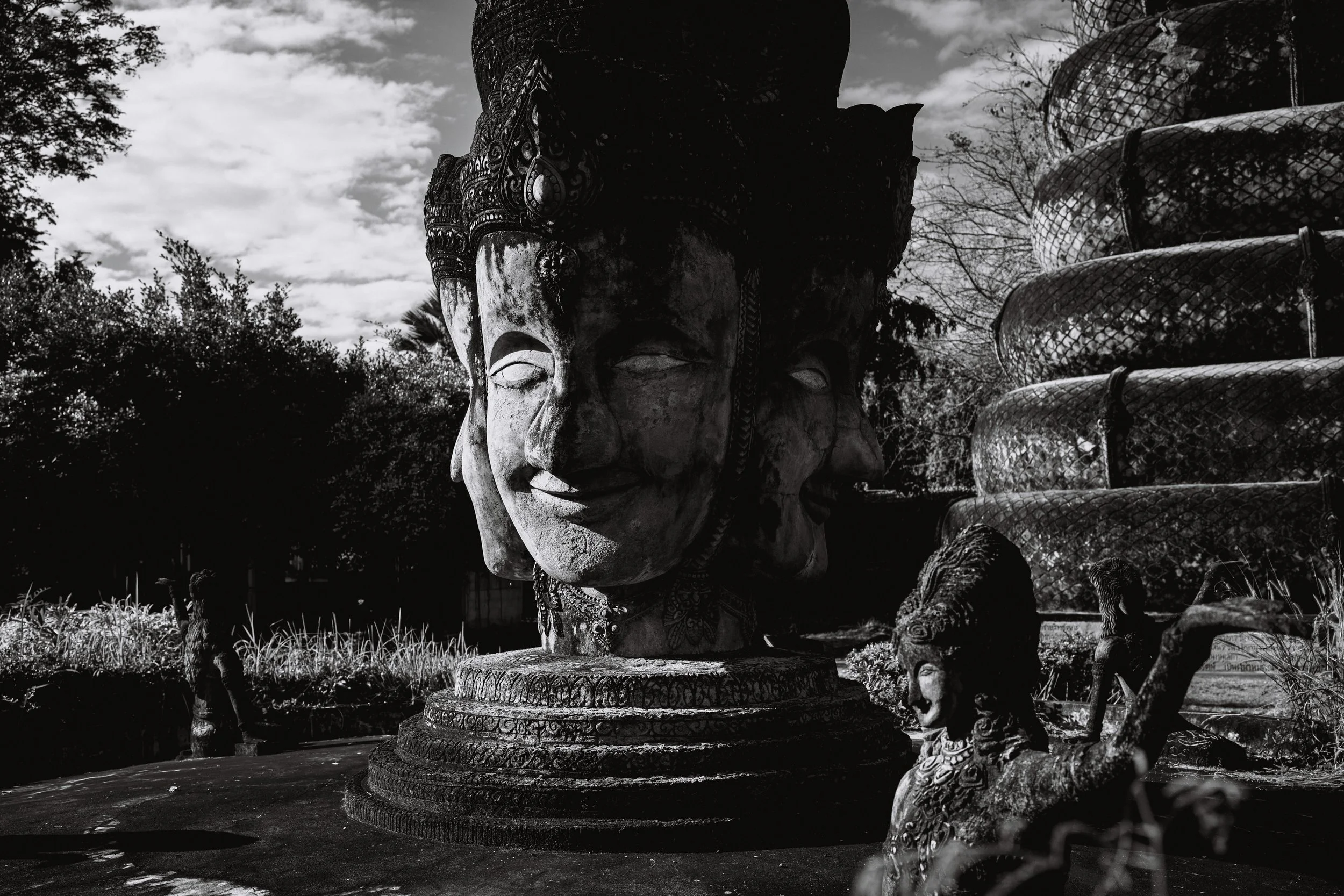
© David Roberts | Sony α7RV | Sony FE 1.4/35 G Master | Adobe Lightroom
It is worth noting that if I had believed it possible to reconcile imagery from the current ZEISS lenses into a cohesive element of the monograph then I would not replace lenses mid-production. The choice came when I stopped clinging to the idea that this would still somehow lead to a monograph, or at least a Temples of Thailand monograph. Not that I no longer believe that it is a worthwhile or feasible endeavour, but because I believe it can still serve its intended purpose as a springboard into funding Discover Castles of Japan without needing compilation in early 2026. Discover Temples of Thailand was never planned to be shot on Batis, I purchased those lenses to ensure I would have a full working set and still maintain exclusivity down to the undisputable metadata level. As an important aside; if you aren’t thinking about metadata, you aren’t thinking at all — and a large reason the choice not to continue with either Laowa or ArtraLab (that have no EXIF chip, requiring manual input) was made. The plan from day-one was for the project to be shot on the Otus ML, as a symbolic gesture as much as a practical one. No one else is shooting a monograph (you will be lucky to find someone shooting a YouTube video over 15 minutes long), but as we all know I was left to begin with the Batis. I may seem sour grapes over ZEISS, and I am. So many choices were made to ensure that they would be integrated as a partner to DRobertsPhoto. If they want Ted Forbes to shoot the bushes outside his house instead of facilitate a monograph, then I am happy with the comparison as I do not measure short. As they say; those who can’t, wear a big hat…
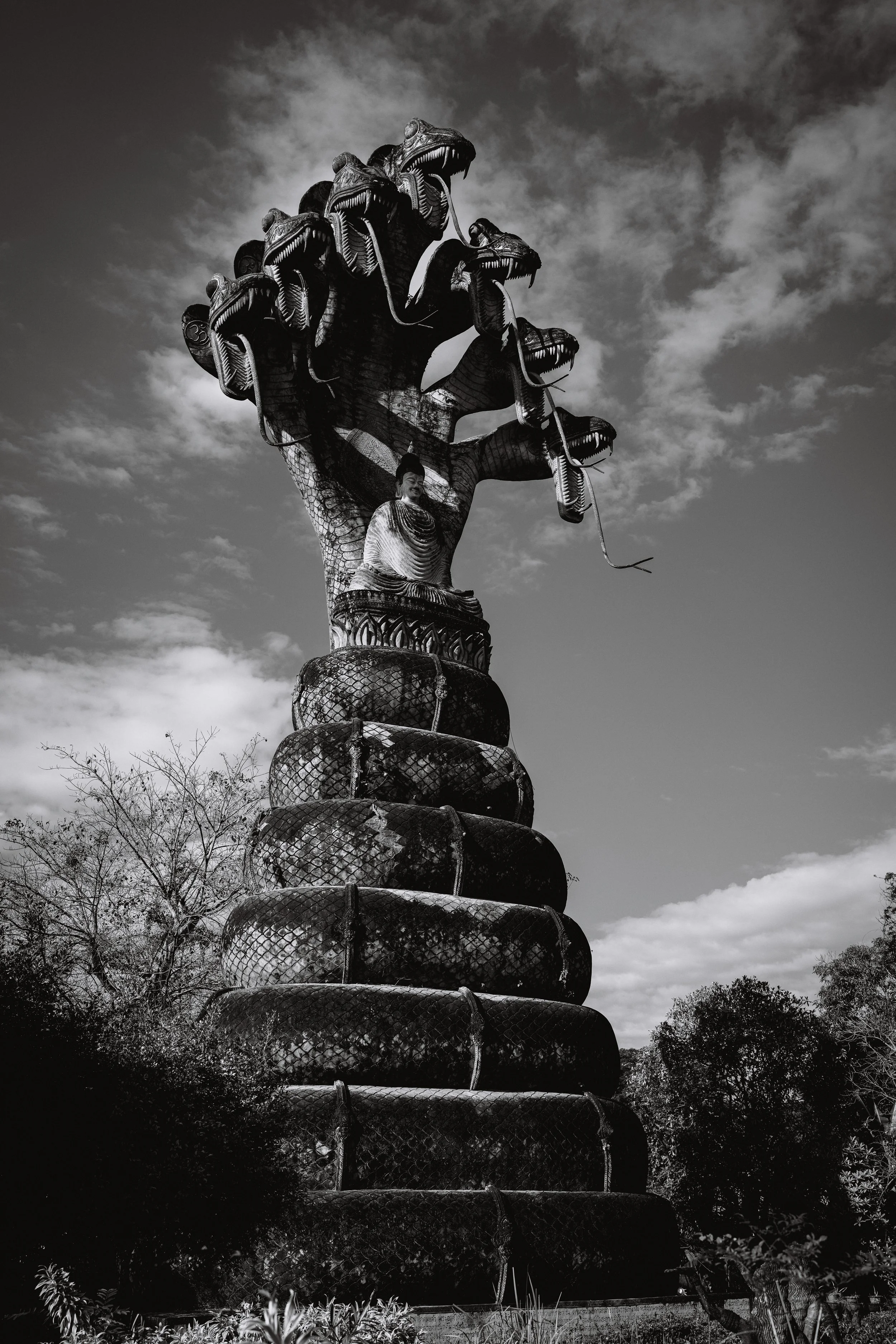
© David Roberts | Sony α7RV | Sony FE 1.4/35 G Master | Adobe Lightroom
Back to the G Master, before I talk more about the site (which honestly most of these Field Reports reject as they are a documentation of the effort, not the place. The place belongs in the monograph). If I was to liken my work to anything, it might be to illustration. If I were to liken my use of character lenses with high micro-contrast, then it would be like using a toothy paper and graphite — the look is baked into the medium and more-so for panchromatic filmstock (HP5 Plus, Neopan ACROS, Tri-X etc.). Moving over to the G Master feels like being given the smoothest bright-white paper you could imagine and coupling it with the deepest blackest ink. The fine detail rendering of the G Master is absurdly good and whilst one does find the need to work the files, I may even argue that what the files contain is more of everything, but delivered in a very balanced manner. There aren’t less fibres, just that the valleys are not as deep. In a way it makes editing a fundamentally additive process similar to painting, whereas with character lenses its nearer to a subtractive practise, like carving. As the medium does not change, it is only the creative mindset. Slightly esoteric, but apt.
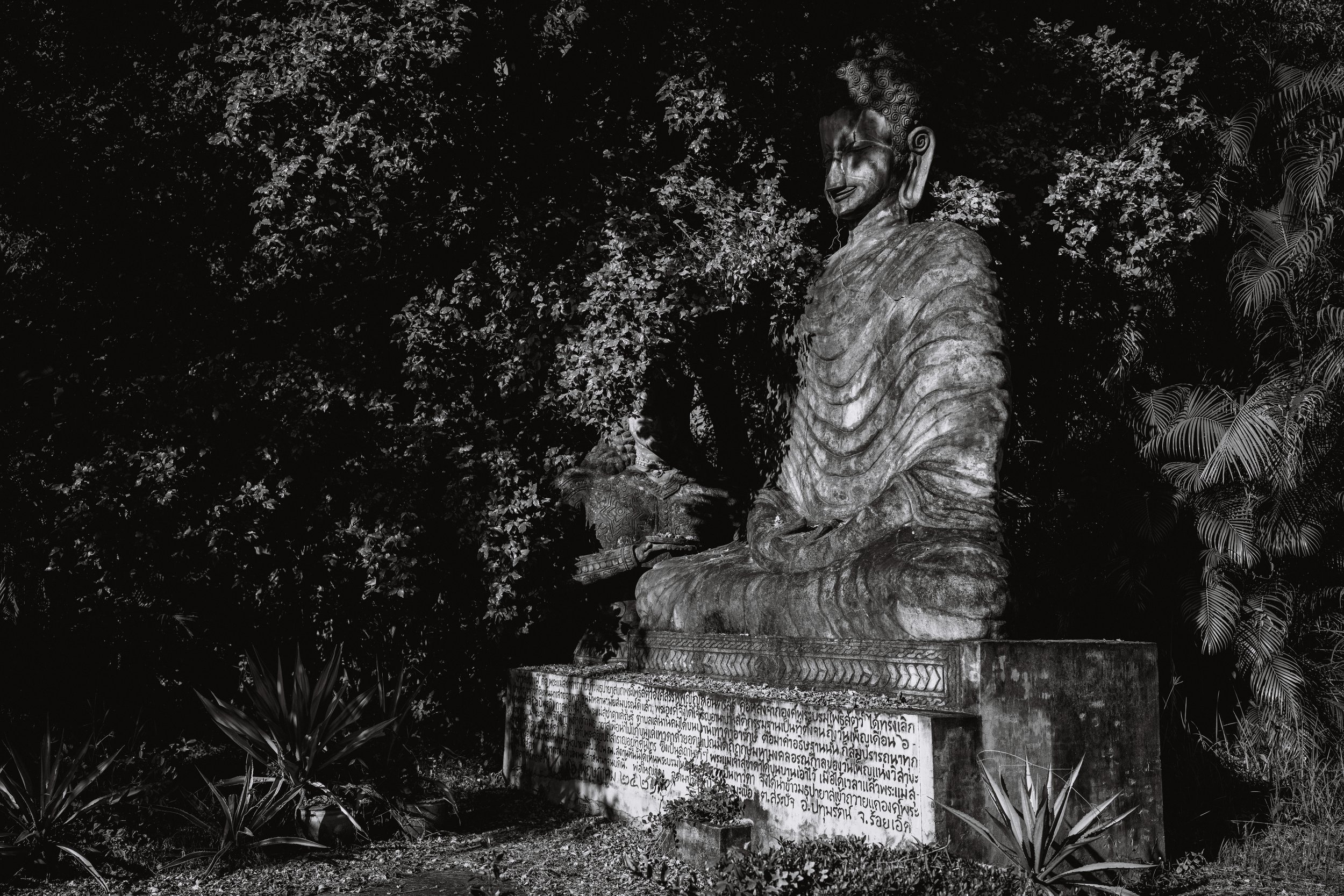
© David Roberts | Sony α7RV | Sony FE 1.4/35 G Master | Adobe Lightroom
On the same lines, I also want to broach the subject of what an “upgrade” really means in context, rather than YouTube hype. For most, the equipment in the hand is where the photographer sees the technical ceiling. When we look at the equipment Sabastiao Salgado or Ansel Adams had to hand, the fallacy becomes apparent. I think new equipment can inspire you, and have wrote to no end how lenses like the Voigtlander 15mm Super-Wide-Heliar absolutely changed how I looked at what an optic can do to shape your images or how HP5 Plus and Neopan ACROS fundamentally set benchmarks for what monochromatic imagery meant to me. This is not up for debate, what is up for debate is diminishing returns. If you put an average driver on an average course into a Ferrari, they will be faster than in a Fiat. That’s granted. But what happens when the same driver is put on a wet technical downhill course? The disparity narrows. The playing field equalises. Perhaps the driver is actually faster in a slower vehicle. However, an advanced driver would see massive gains in the Ferrari no matter the course conditions. My Thailand imagery does not come from a Fuji, a Sony, ZEISS or GM, but from a life lived here. My images are not and can not be the same as a tourists, but when I come to a technical blockade due to sustained practise, new equipment can absolutely lift the ceiling. And yes, I do not miss the irony of the situation. For the first time in years I have not been handicapped by gear, and the first time in my life I have been handicapped by health, and my environment. On another aside; a recent Leica post regarding a workshop in Vietnam irked me, where the attendee was highlighted and stated that it was his first go at “documentary.” Documentary is not a style, it is not a genre one tries, it is deep understanding. If you do not have understanding, what are you documenting? What value is another ignorant opinion worth in this market? This is why DRobertsPhoto must part ways with heritage houses. What’s left are the bones of giants, not giants themselves.
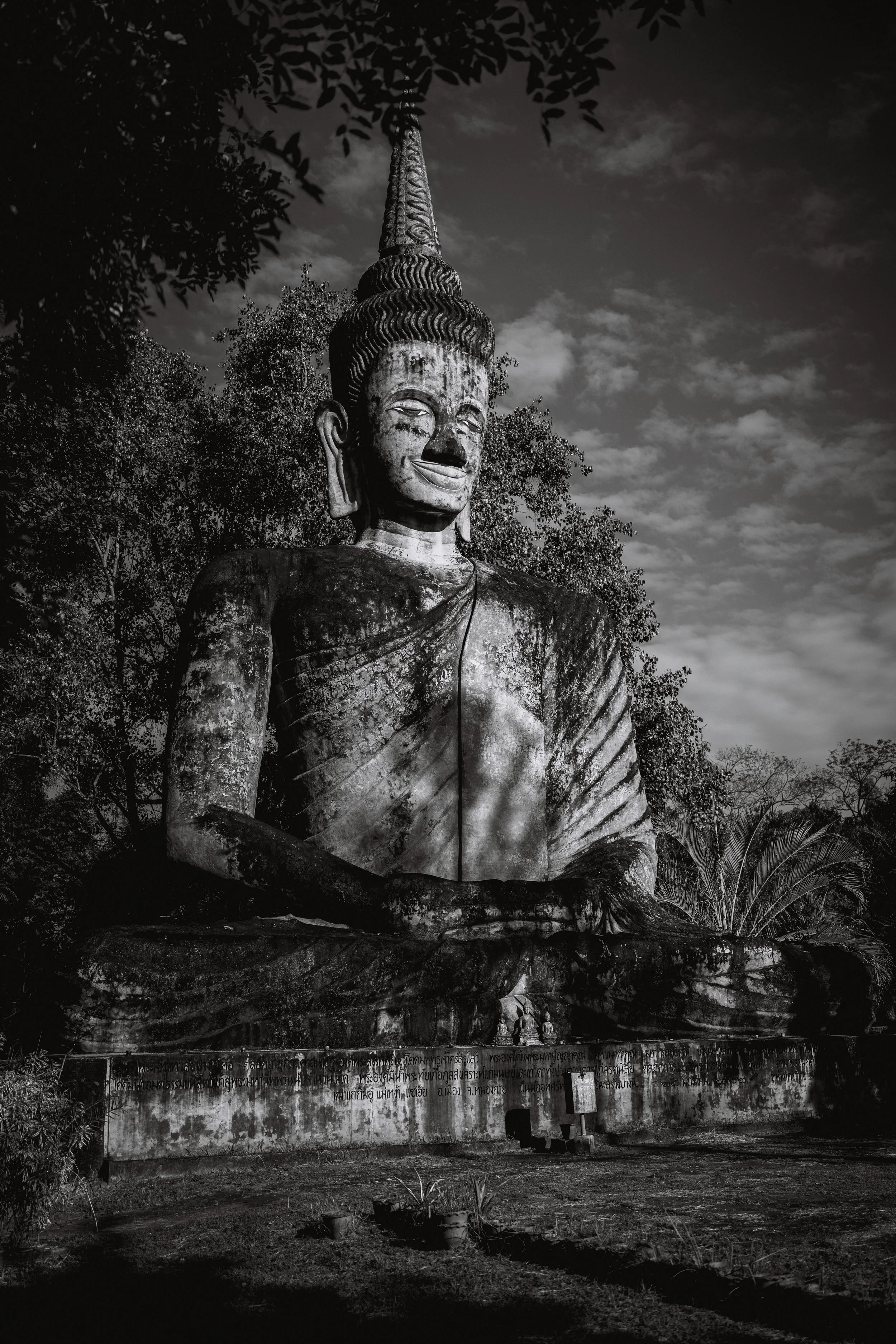
© David Roberts | Sony α7RV | Sony FE 1.4/35 G Master | Adobe Lightroom
This is the last time I am likely going to talk about ZEISS, the switch has been made and the wolves remain outside. Or at least outside of my yearly report. Sala Keo Kou then, and why I feel torn over it. It is not old, but pretending to be ancient. A part of me that comes from a country where most houses are centuries old, that’s hard to swallow. In fact it mirrors what I just said about that Leica post. But, I also come from a country that is debating banning of its own flag! So to me national identity is a precious thing. When time, money, and effort can be spent on the mundane, the choice to imitate the past and hold onto that identity is not lost on me. I don’t think there is a line anymore between real and imitation, just like much product of the revivalist movement of the 1920’s is held with similar value to what it imitates. Is it imitation or continuation? It really comes down to reason and execution. When reason is lacking even superb execution (like the Leica post) is underwhelming, that’s imitation, ego-flattery. When it is done by the people who lament the absence of a well-documented history? I think we begin to see where worth truly lies.
Discover Temples of Thailand is supported by Angelbird Technologies with companion motion sequences in collaboration with Dehancer Film Emulation.

