
We are in February now (10th, 2026) around a month since the last report. I have been grounded for two weeks due to medical reasons, mainly self-imposed and preventative. I stated that these field reports are not meant to be site reports, and stand by this. However, these do also double duty as a current (and public) log of events so that during compilation I am not reliant on memory alone. Many sites are small and iterative; not to say lesser but certainly not enough to warrant complete site report. I can spend anywhere from twenty minutes to two hours or more at a single site. These sites are nearer to twenty, be it due to prior familiarity, size or other factors. As with the larger sites these temples were chosen due to their proximity to the large ring road that surrounds Udon Thani, allowing access by car rather than motorbike. I’ve been forced to rebuild my health from the ground up, and also this project. The idea is to use these setbacks to do a little bit a lot of times. Projects like The Nakasendo Way will be singular. If I miss that because I pushed myself too hard on Discover Temples, it would be much harder to salvage than pickups on a temple in driving distance.
© David Roberts | Sony α7RV | Sony FE 1.4/35 G Master | Adobe Lightroom
© David Roberts | Sony α7RV | Sony FE 1.4/35 G Master | Adobe Lightroom
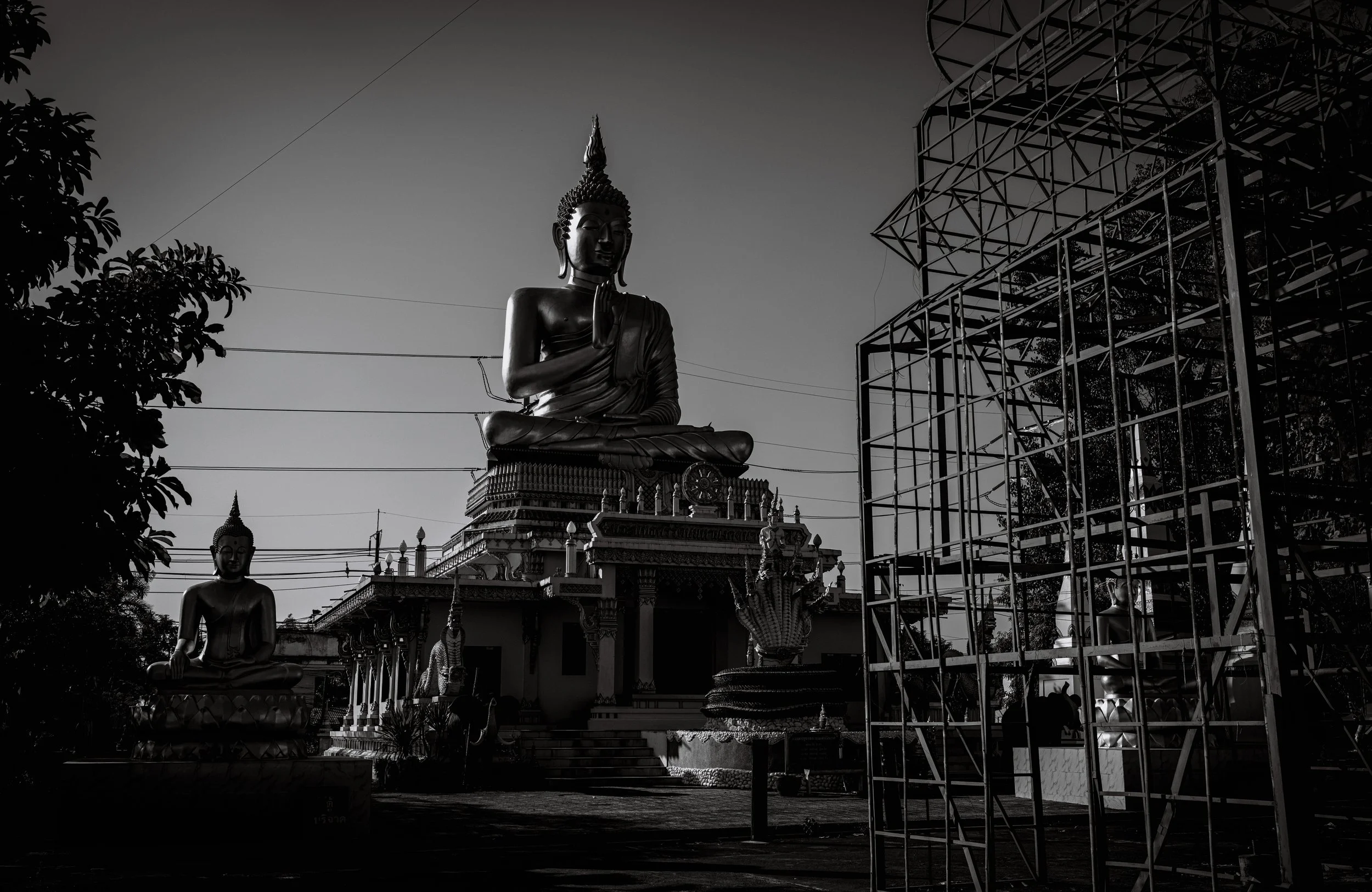
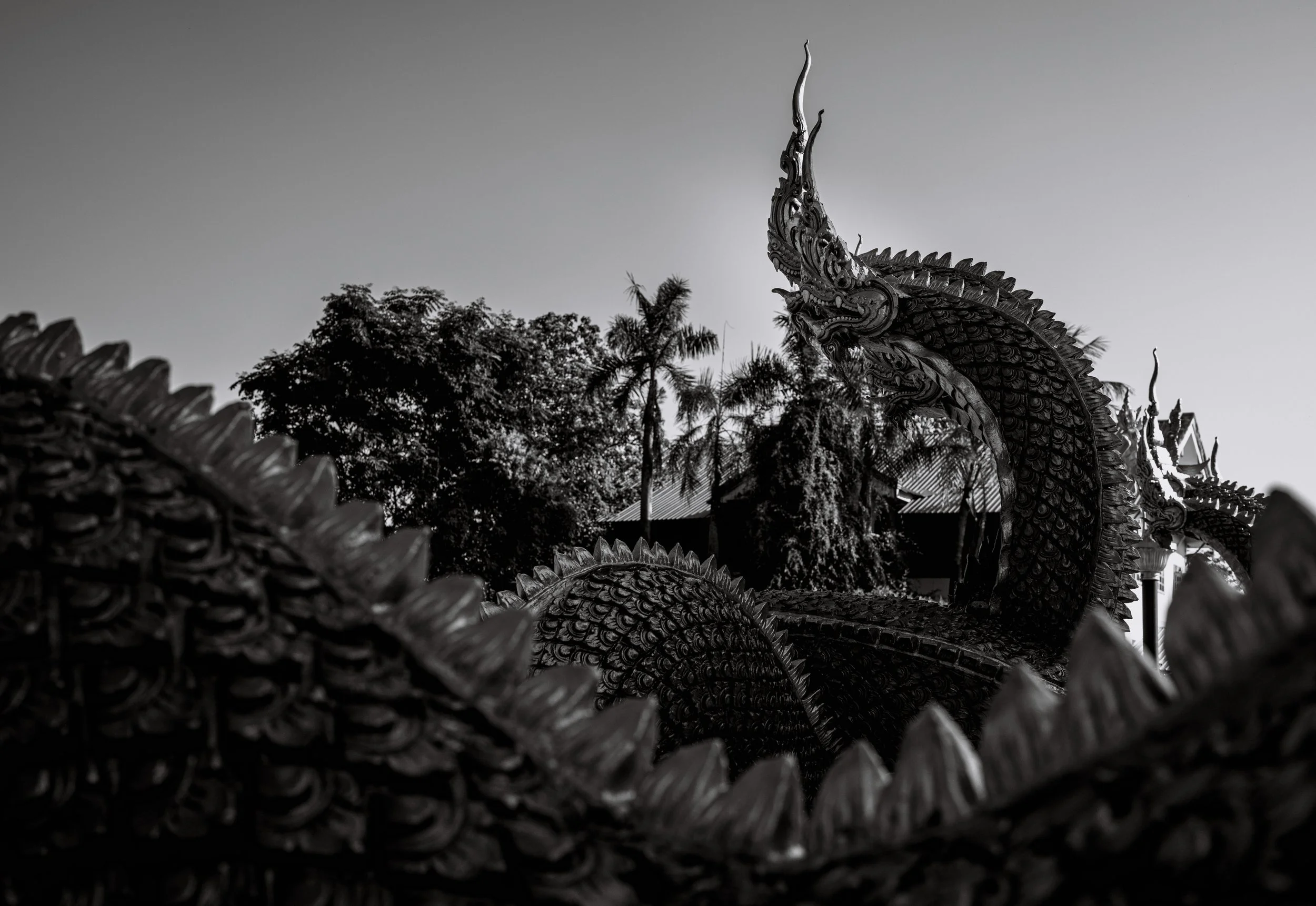
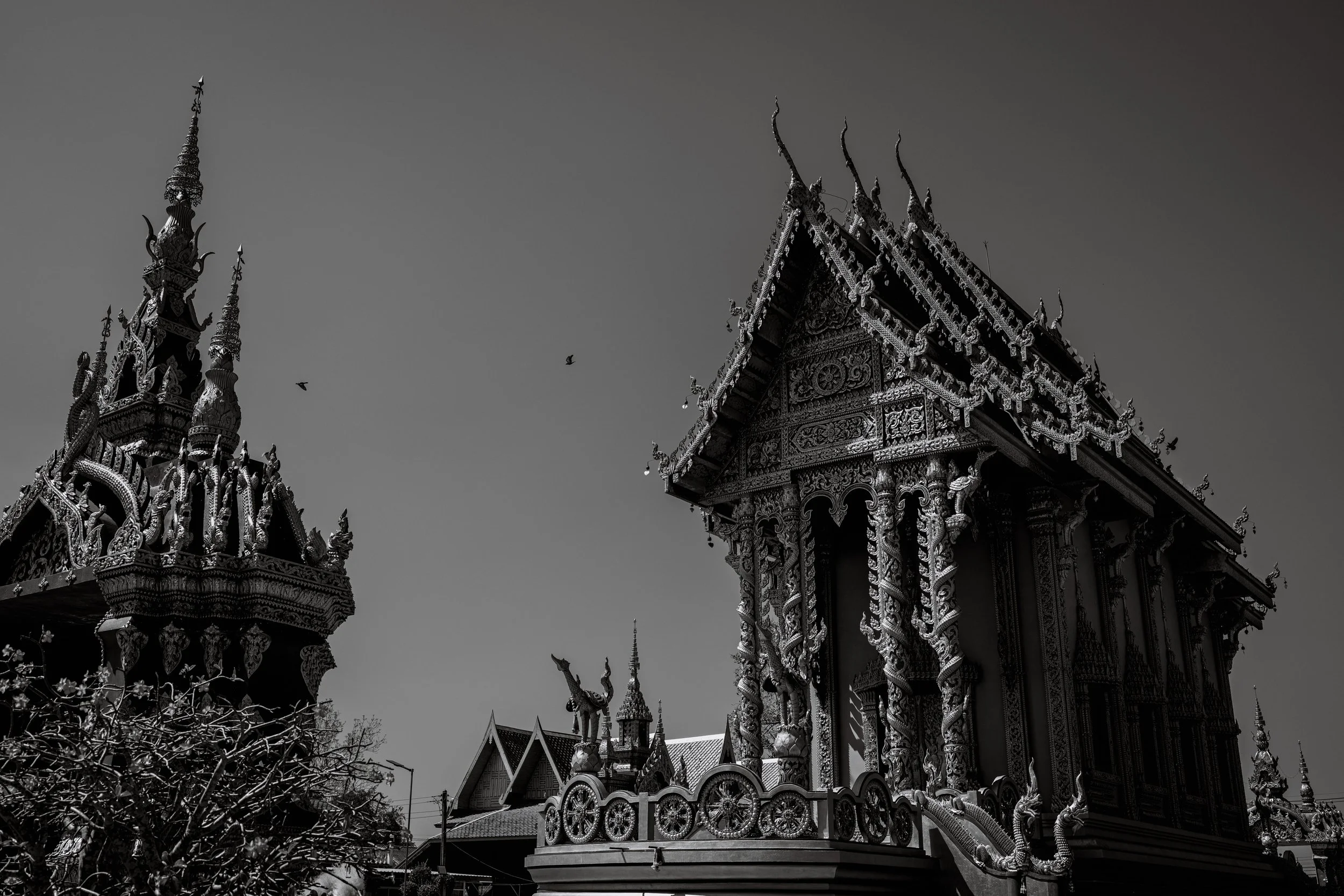
Wat Nakha Thewi is located on the city outskirts, just as you enter Udon Thani from Nong Khai. Usually Buddha sculptures are built facing traffic, but this one (by design or otherwise) faces away from the road. The temple seems to be in a semi finished state, with multiple buildings clearly finished along with steel frames for new structures. Thai temples are rarely in stasis, and reflect the changing times and expanding communities that use them. The chosen candidates for the Resilient Economic Future commission by the IMF are producing urban works and craft fairs as the Bangkok Post is “reporting” on TikTok datacentres (that mine the land of water and pollute the skies with carbon) with the same vocabulary, verbatim as a “resilient digital economic future of Thailand.” It is this communal, agricultural spirit that is the true resilience of Thai peoples. The peoples whose national greeting is “Have you eaten rice?” and whose farmers are scapegoated year after year for clearing the fields their Ban Chiang ancestors burned millennia ago. Must their ways make way for the new? Where is parity in that? As someone once said: “It is a shame that trees don’t give off anything profitable or they would be more planted. Shame they just provide the oxygen we breathe.” At the time I was saddened and dismayed by the rejection; knowing full well my submission was the strongest. My work is world-class, and this was a domestic-class open-call — when Stuart Isett steps up to speak on behalf of my authenticity as a documentarian, it angers me that it was in vain. I can blow my own trumpet well enough but for a committee to dismiss his word, and the effort it takes to garner TASCHEN review as a Thai citizen, they cannot claim this to be a neutral decision. Yet as time passes I see it for the gift that it is, a revelation of what institutions have become. I recently updated my Instagram bio with the quote “Punk is not fashion” which says it all. Culture isn’t dress up. It isn’t clean, as much the wires and the steel, the red Fanta bottles and faded paint…
© David Roberts | Sony α7RV | Sony FE 1.4/35 G Master | Adobe Lightroom
© David Roberts | Sony α7RV | Sony FE 1.4/35 G Master | Adobe Lightroom
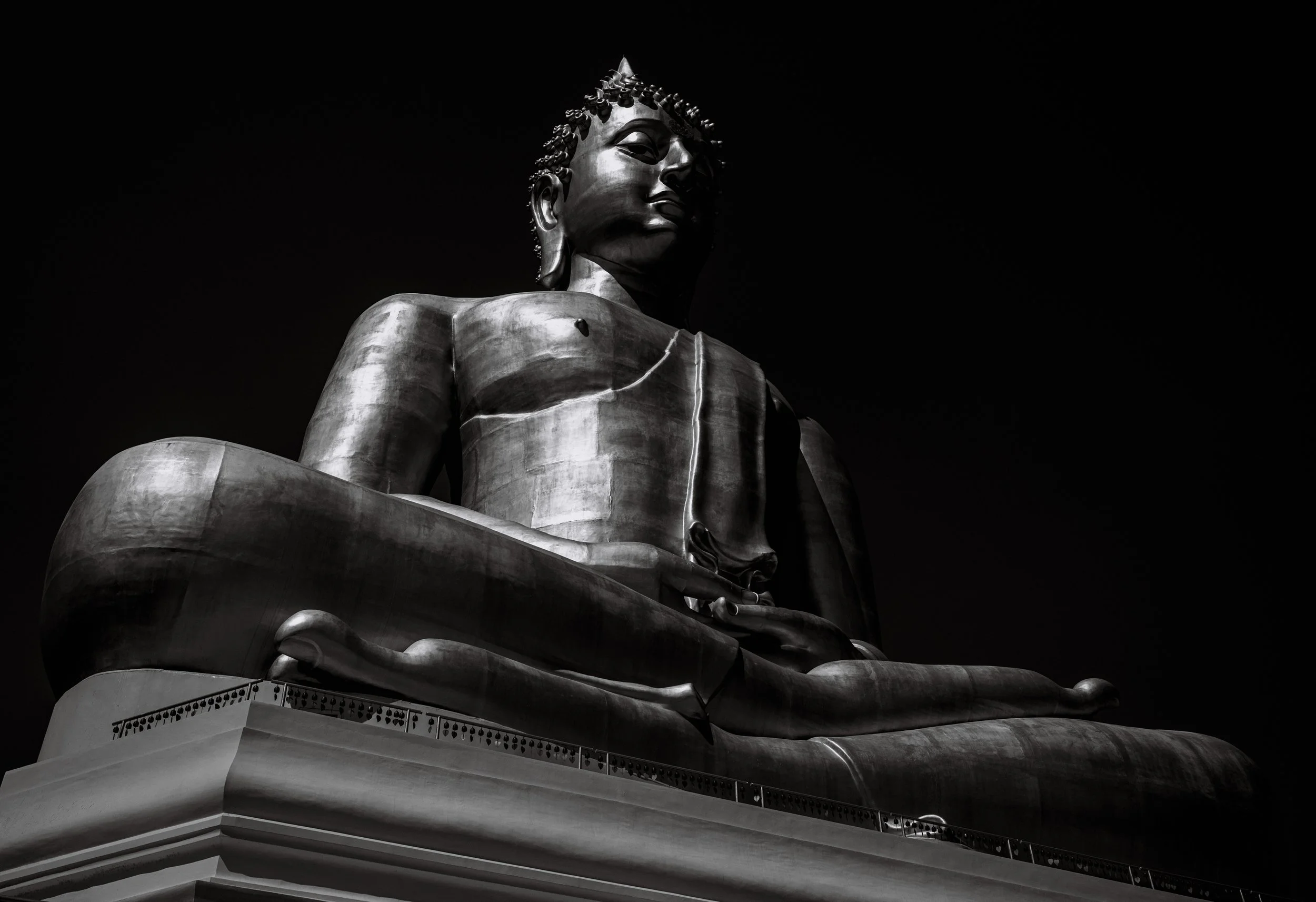
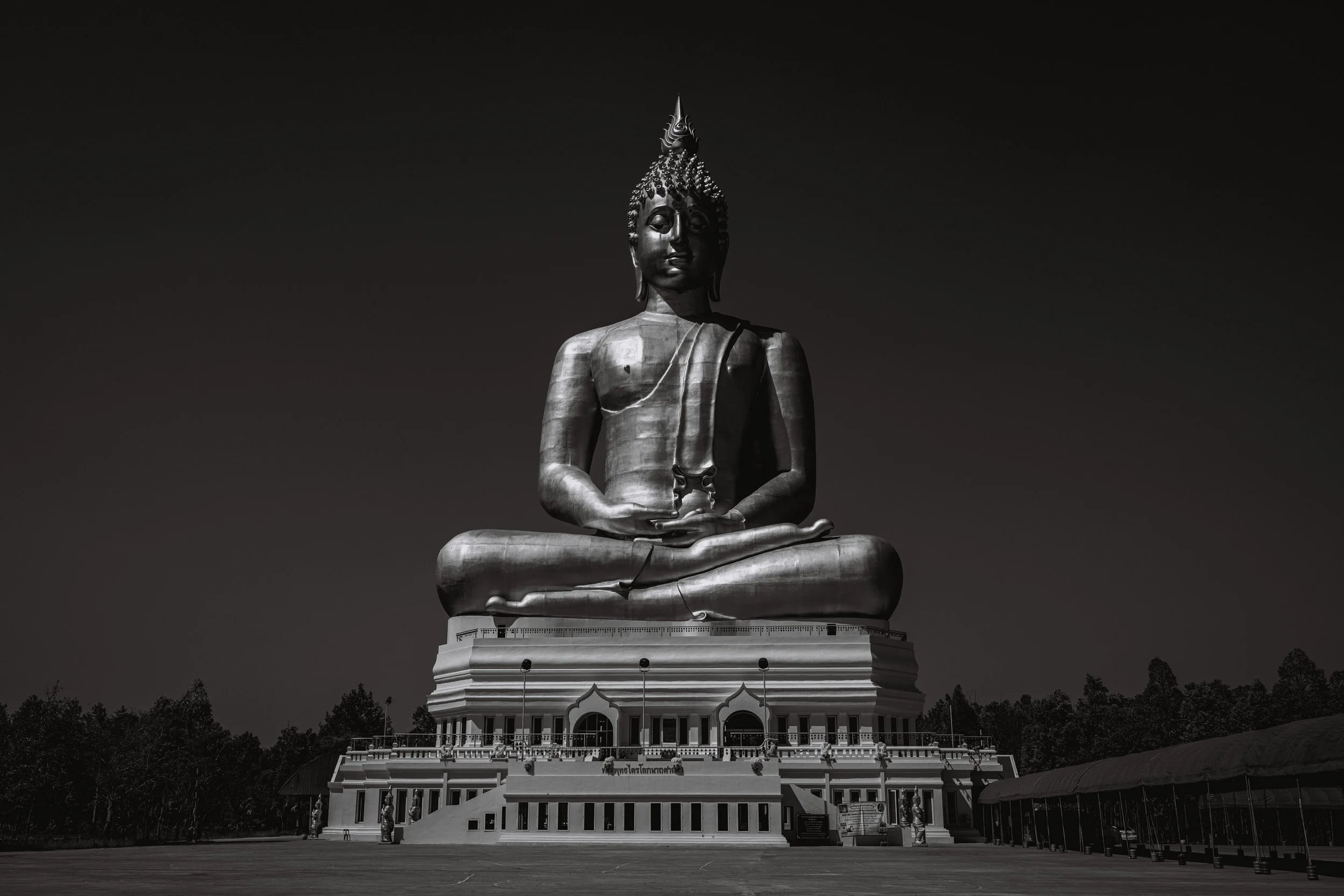
The reason I bring up the IMF is that the next temple, Wat Pa Nong Saeng, situated outside of Udon Thani on the road to Nong Bua Lampuh was central to the submission. I have followed this site for the past year during the finalisation of construction. If the Buddha of Wat Nakha Thewi was considered big, then perhaps titanic or colossal would be a descriptor more befitting here. At 75 metres in height it is over twice the size of Christ The Redeemer in Rio De Janeiro. Even roadworks have been altered to accommodate the entrance to the temple; proving that this temple (even if taken in solitude — which it is but one of many) provided not just for the economy during construction but influenced regional civil engineering efforts. As I stated, failure to commission my works was not a neutral decision and one that is dismissive of Thailand’s resilient economy in the heartland that has never reaped the economic rewards despite feeding the nation (both literally and figuratively). The portrait is the first taken sans supporting crane or scaffold. There are not many places in the world that construction efforts of this nature are not only entertained but completed.
© David Roberts | Sony α7RV | Sony FE 1.4/35 G Master | Adobe Lightroom
© David Roberts | Sony α7RV | Sony FE 1.4/35 G Master | Adobe Lightroom
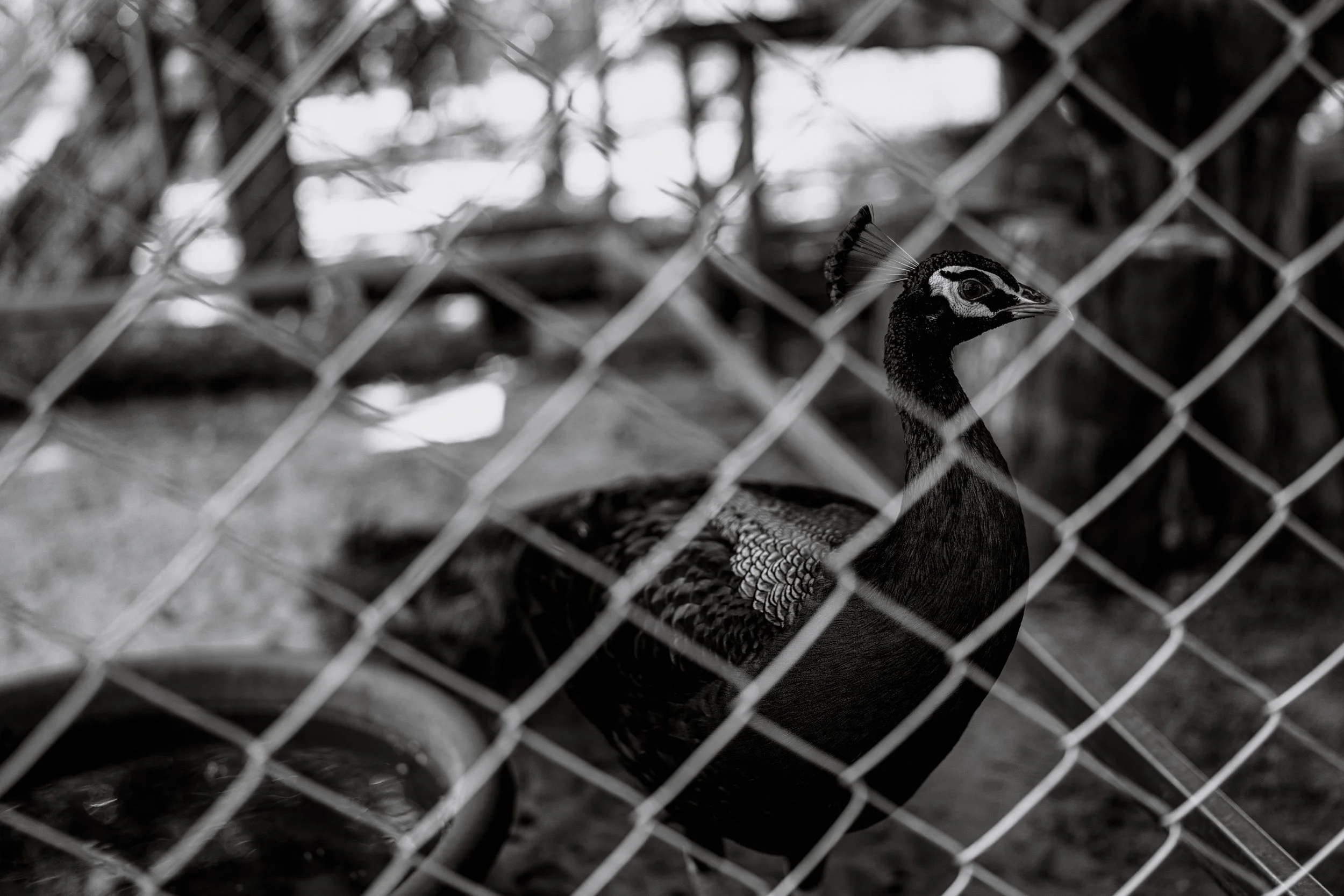
Wat Puttha Wanaram sits on the other side of the ring road to the colossal Buddha, a few Kilometres down. Whist tempers easily flare at the thought of the IMF, they quickly cooled after my interactions here. Talking to the women at the temple where they invited me to bring everyone I know (so that’s a headcount of two, and one is my dog). They are fiercely proud of thier temple and especially keen to point out its recent golden paintwork. Of course I am no stranger to this temple or Udon Thani, but often it is easier to play the role that people see you as occupying than correct them. I have photographed this site a fair number of times this past few years, both before and after its makeover. The last time was for Brightin Star, another review that never made it into Fuji X Passion despite sunk logistical costs. It is currently in limbo as part of my Third Party Lenses for Fujifilm X Mount e-guide. Another project that remains casualty of adjacency to institutions that demand the world in return for nothing. At any rate, this is a site that I feel very kindly towards. As much of the infrastructure was, this was built during the 1970s, when Udon Thani was a GI town. There is a distinct look to these temples and they were still in good repair when I was a child during the 90s. Over the past decade many have fallen out of favour with new builds bringing in attention. There is always an outlier and this temple seems to be one, since just a few months ago they now have a new steel run for thier peacocks.
© David Roberts | Sony α7RV | Sony FE 1.4/35 G Master | Adobe Lightroom
© David Roberts | Sony α7RV | Sony FE 1.4/35 G Master | Adobe Lightroom
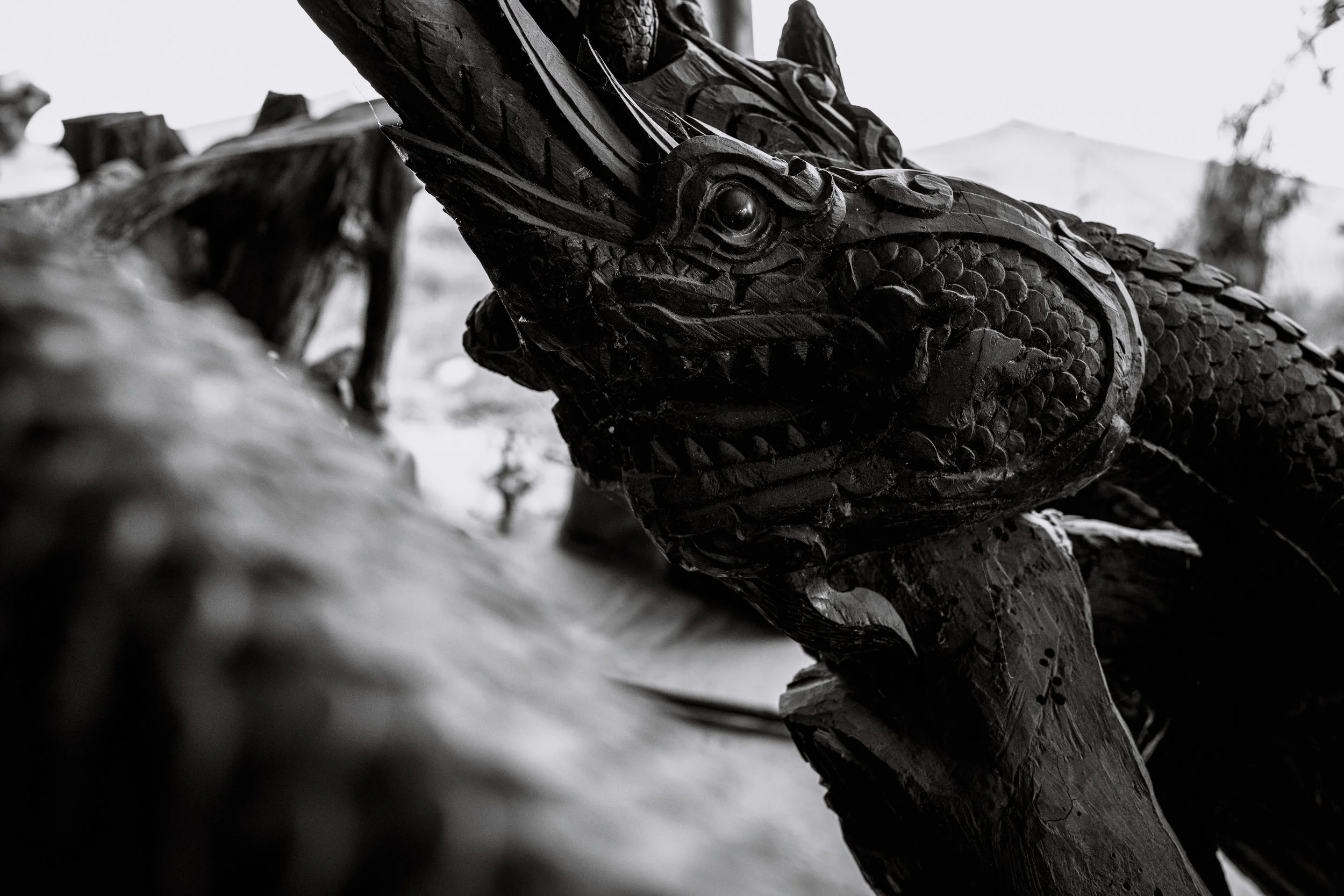
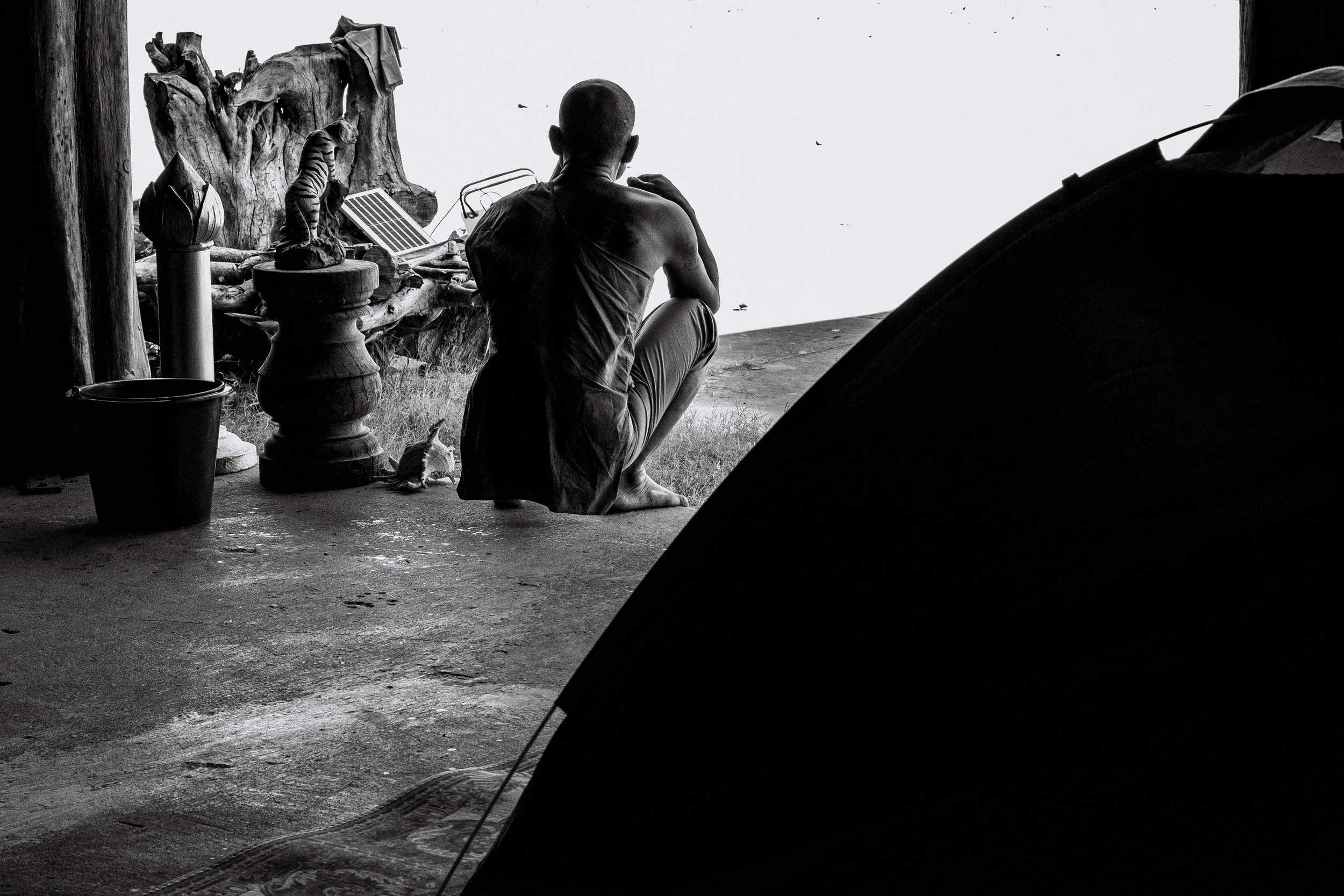
The conversation with the monk turned towards these half-finished carvings. Giant tree trunk sections over a meter in diameter were exposed under the monastic quarters, where the old peacock run used to be. I asked the purpose of these and he told me that they were decoration, and some were once turned into furniture. I probed him a little more, I don’t push often but I wanted to here. My father was fascinated with wood carving and I have teak heirlooms of his that are impossible to replicate. The monk explained that no one knows how to carve them anymore, and that the last time one was carved must have been over ten years ago. I thanked him, and asked to enter to photograph — after asserting that the purpose was to document these before it was lost to time and help invigorate interest. He began tidying the area, but I requested that he stop and that the fact that these exist in this humble state is the story itself. I am bitterly reminded that the pursuit of greatness is one that has not just left photography, but all artisanal crafts. I wish I could end this report in higher spirits but this is the current state of the union. The masters are gone, and the freedom to fail no longer exists so creativity is homogenised and mediocrity is the outcome.
All sites individually linked to Google Maps
Discover Temples of Thailand is supported by Angelbird Technologies with companion motion sequences in collaboration with Dehancer Film Emulation.

