
This update chronicles the events of 2025 from January to September. Discover Temples of Thailand and the events of Q4 are documented in On the Future of DRobertsPhoto. Please see 2025 Mid-Year Update for a micro view of projects and output. For investors and interested parties, proof of all claims can be provided under NDA.
2025 has been a strong year for DRobertsPhoto, starting with 2024 content entering serialised publication through the first half. The project “Manual Lenses for Nostalgic Imagery” was commissioned by FUJILOVE Magazine as a six-part series, with editorial clearance for five lenses of my choosing, alongside a final round-up. Concepted as a single article in collaboration with Thypoch’s newly released 35mm f/1.4 Simera lens for X-Mount, the project quickly grew scope due to market alignment. I reached out to Fuji X Passion, whom I also contributed to (monthly educational articles) and pitched a second, review-based article (bi-weekly scheduling) that would culminate in a collected e-guide. This was also received positively at the time and allowed me to connect with various manufacturers without promising feature in my upcoming series explicitly. After negotiation, It was confirmed that I would open the series showcasing both Simera lenses, as the highlight of the series due to their unique place in the commercial ecosystem, as higher-value premium options. This was ultimately a success, and led the series with strong, iconic imagery. However, this would be the final time I collaborated with Thypoch in any major way due to a fundamental difference in views on photography and image usage, despite a shared love of legacy optics.
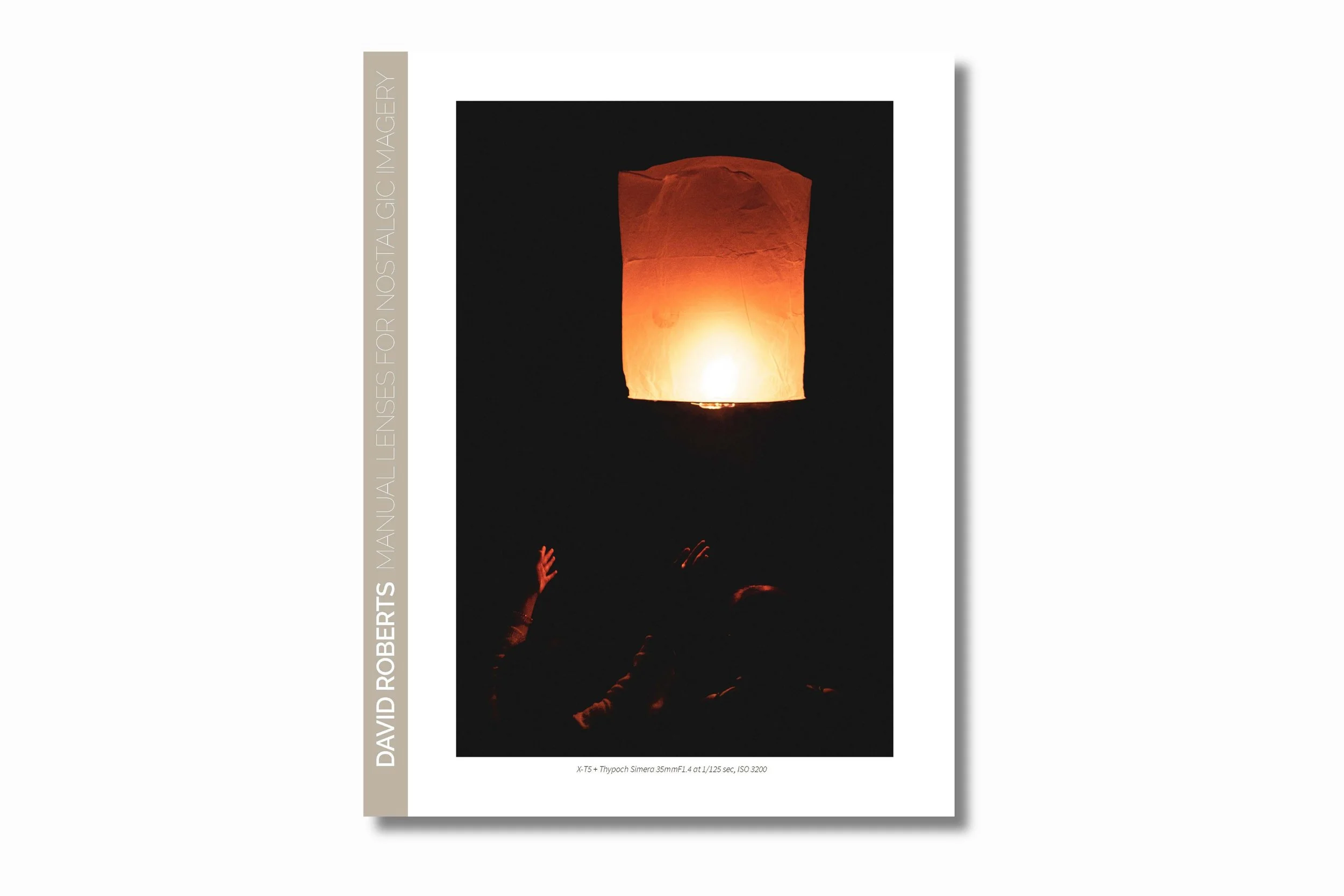
FUJILOVE Magazine Issue 106
Alongside Thypoch, ArtraLab confirmed participation with their Nonikkor 35mm f/1.4 in the third article (March) , and Venus Laowa with the Argus 33mm f/0.95 APO (April). I would continue my relationship with both brands, both through editorial contribution and my personal work. I had also reached out to a plethora of other manufacturers regarding editorial collaboration and many replied after much of the production was finished. Meike were one of the first to back my work, but due to their market segment was not an ideal choice for FUJILOVE Magazine, instead utilising their lenses for Fuji X Passion. The final lens chosen for May’s article was the newly released TTArtisan 75mm f/1.5 — a Carl Zeiss Biotar clone. I am not usually one for direct clones, but as a counterpoint to Thypoch, ArtraLab and Laowa’s interpretations, worked well as a wildcard. Brightin Star participated in the guide, as did Viltrox. All collaborations were on the basis that any materials were not to be reviewed before print and that the opinions would be fair and honest. This content was garnered throught Q4 2024, with pickups in Q1 2025, setting the standard for Discover Temples of Thailand production.

FUJILOVE Magazine Issue 108
During the time that Manual Lenses for Nostalgic Imagery was actively in print in FUJILOVE Magazine, content for Fuji X Passion was made, and negotiations began with ZEISS. Between April and May of 2025, I became unsatisfied with my relationship with Fuji X Passion, believeing it to be one-sided. these criticisms fell on deaf ears, and came to a head when editorial was seen using what is assumed to be AI content, and proven third-hand information, over my first-hand contributions. I reclaimed ownership of my e-guide and moved my reviews to DRobertsPhoto, Meike, ArtraLab and Venus Laowa followed. Brightin Star showed interest but lack of fresh inventory, as did Viltrox. At this time I was actively working on “Too Quiet for the Algorithm, Too Loud for Any Room” my 13,700 word manuscript and what would become the origin of my retrospective, and my treatises on Philosophic Documentarianism. It is a stand-alone piece meant as a Trojan horse “Looks like a blog, reads like the feed.” Whilst it garnered editorial review at House of Anansi Press, I have yet to decide if I wish to continue pitching elsewhere or continue with publication at all, despite self-publishing being an immediately available option. This is due to crossover with future works that use the manuscript as a baseline for ideation.

Too Quiet for the Algorithm, Too Loud for Any Room
Parallel to these events, I was building an article for Fuji X Passion titled “Temples of Thailand,” as the article progressed the value of the IP became exceedingly (and obviously) outweighing the value of a community platform such as Fuji X Passion. Once the decision to dissolve the relationship and affiliation was made, Temples of Thailand was re-addressed. Before Temples of Thailand was adopted as the main project of DRobertsPhoto, I contemplated pursuing a journalistic path and pitching Panos — an agency known for work in Southeast Asia — prior main project “Soul of the Planet. Heart of the People” it was decided that the project would be put on hiatus, so as not to endanger my current domiciliary. Soul of the Planet. Heart of the People is a project that I dictated three years of my life to (and led to interest in my photographic output) was placed on indefinite hiatus. In the time since, I have penned two photo essays on the subject “A Friday in Laos” exploring life in the communist state, and “Udon Organic Farm” where (recently published) Jenifer’s sustainable farming practices meet my macro pessimism. Whilst there is a journalistic element to my work, I do not consider myself a journalist, nor wish to become one. My work is technical based fine-art photography, layered with philosophic introspection where the image is considered a document first and foremost.
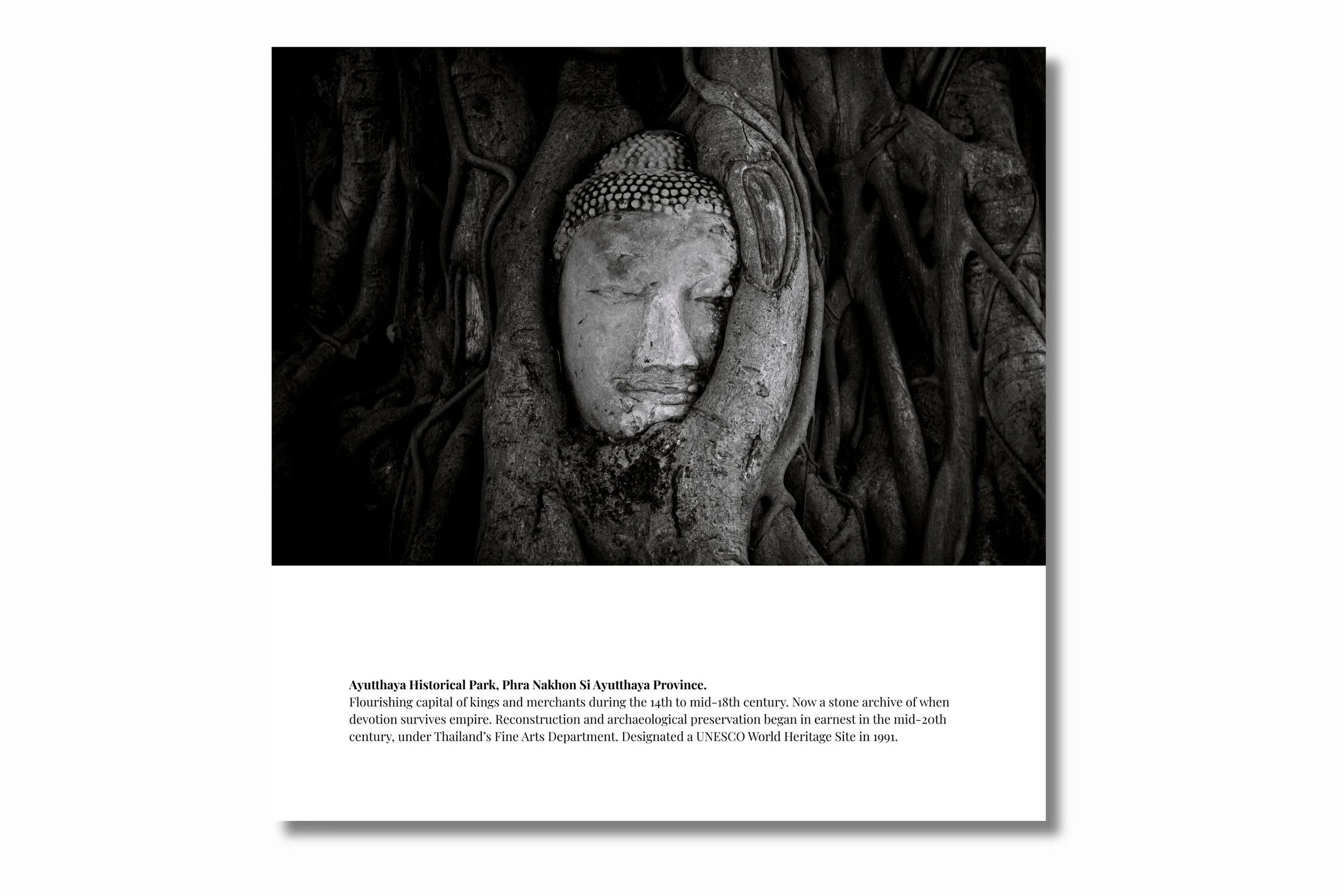
Discover Temples of Thailand Concept Material
Initially Temples of Thailand was intended to be a soft-reset, and an engagement funnel for DRobertsPhoto. During ideation, the idea of returning to Japan, and continuing my project on Sengoku fortifications (amongst other things) was explored in-depth, and was the backbone for a pitch to TASCHEN. With this in mind the nomenclature Discover was adopted, and the projects were to be twinned: Discover Temples of Thailand and Discover Castles of Japan. The former the springboard for the latter. TASCHEN responded to my cold un-agented pitch within hours, and the project escalated through Head of Submissions and into six-week editorial review. During this six-week period two things of merit occurred; Manual Lenses for Nostalgic Imagery concluded, and ZEISS negotiations escalated to terms. TASCHEN ultimately passed, citing calendar-fit. This was catalyst for my next steps, I wanted to secure institutional validation as proof-point for reopening negotiation with TASCHEN post-hoc. ZEISS was no longer a nice-to-have, but C-Suite worthy market validation. Alongside ZEISS, I targeted Angelbird Technologies (OEM to ARRI, RED, Atomos), securing facilitation and logo-use for credit on Discover Temples of Thailand, I was approached by Dehancer Film Emulation, I accepted facilitation and technical support for credit in motion companion pieces. Terms were agreed, dates were set for Q4 production, and ink was put to paper with ZEISS.
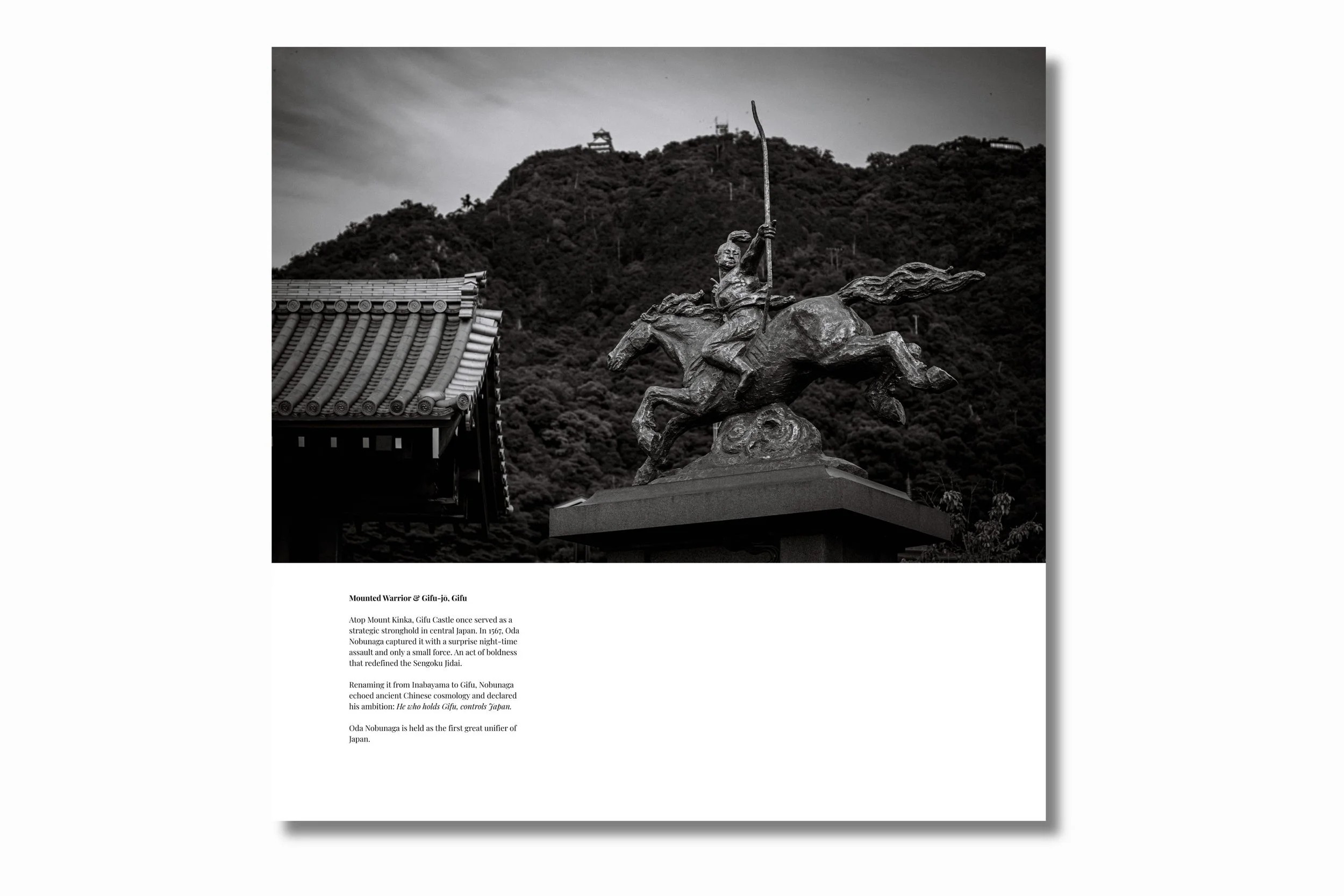
Discover Castles of Japan Concept Material
With FUJILOVE and manufacturer obligations needing to be completed, the next few months were a mix of pre-production for Discover Temples of Thailand (now self-funded to be pitched post-hoc), tying of loose ends before ZEISS exclusivity, and writing of companion pieces to strengthen my claim as author, not just photographer. ZEISS was to facilitate the Touit range for Fujifilm, for use in multiple individual articles for FUJILOVE Magazine, and for inclusion in my e-guide. Due to operational failures by ZEISS’ regional subdivision impacting production timelines and external deadlines, the articles were condensed into a singular deliverable. Due to Carl Zeiss AG’s request for return-of-goods as solution, no further imagery could be made for the article or for the e-guide. After extended negotiation, I informed Carl Zeiss AG that I would no longer work with their subdivision due to a lack of respect for external timelines, product condition, and my reputation within the industry. I further informed them that as the facilitation was not as agreed, they must provide permanent provision of the Otus ML lenses — flagship lenses for a flagship monograph — prior to production start or I would not credit ZEISS as a partner in my (TASCHEN reviewed) monograph. I offered ZEISS the option for mutual dissolution of the partnership to regain independence, and they chose to terminate the contract — showing the understanding they had was never long-term or heritage based but singular, and short-term transaction based. These events occurred after sacrificing all optical manufacturer relationships (rather than negotiate fairer terms with ZEISS), and personal investment into Sony bodies and Batis lenses for full compliance and future-proofing — therefore sacrificing all community goodwill garnered by work within the Fujifilm community. Regardless of facilitation, the monograph could be made with owned ZEISS optics, but I would not participate in an unfulfilled partnership for affiliation with a partner who has shown to have no respect or professional consideration for my work. You can read my official public statement HERE.

FUJILOVE Magazine Issue 117
Many decisions were made to comply with ZEISS requests; all imagery from non-ZEISS optics were archived under the new Archives tab. This includes links to editorial, self-published reviews, past projects, Visual Interviews, and past submissions of note. Blog posts celebrating prior manufacturer collaborations were de-listed completely. Work begun on a monthly deliverable negotiated in-lieu of social media content, what I thought was a victory at the time. This would become my Photo Essays, the first delivered was A Friday in Laos, a sister article to this project also became my article for FUJILOVE Magazine Issue 117. A necessary pivot to maintain my agreed deliverable with the editorial under contract constraints and facilitation issues. The second article Udon Organic Farm was delivered in drafted state, and published un-affiliated. Criticisms were made towards ZEISS on the usage of comparatively lacklustre articles over my own — a compliant that mirrored my departure from Fuji X Passion, intensified by facilitation delays.
DRobertsPhoto views the dissolution of unbalanced partnerships as a net-positive. DRobertsPhoto is an IP bank with eleven IP under development, the prime value of which lies in uncontested ownership, if ownership is to be shared it must be for equal benefit. Fuji X Passion and Carl Zeiss AG have failed to meet the standard set for Philosophic Documentarianism, violating the ethos of image-as-document, and/or the needs surrounding operational realties of industry-defining work as proven by TASCHEN review of multiple artefact-level IP including DRobertsPhoto halo-project that upon completion would value the entity at eight-figures — valuation and feasibility uncontested, declined on calendar fit — and Anansi interest in the debut manuscript. ZEISS was aware of only the two Discover projects and 2025 institutional submissions. Were I to have never contested ZEISS’ actions and proceed with self-funded ZEISS equipment, I would expect that our relationship would have continued under the defined timeline, with logo-use on the monograph as planned. This was not tenable, DRobertsPhoto is not for sale, not for financial or reputational gain. Partnerships are peer-to-peer interactions, not patron-to-artist. With the success of Sandfall interactive, Larian Studios and Remedy Entertainment setting precedent for IP-led authorship within the Digital Media Sector, DRobertsPhoto becomes a mirrored, singular, forward-facing entity within sill imagery.